
Introduction & Quick Answer: What is a Banner Advertising Marketplace?
A banner advertising marketplace is a specialized digital media exchange that connects business advertisers directly with website publishers, media networks, and traffic providers to buy banner ads online. Unlike opaque ad networks that obscure placement details behind complex programmatic algorithms, a modern display ad marketplace provides transparent inventory, allowing early-stage companies and founders to evaluate publisher metrics, choose exact placement real estate, and launch targeted visual display campaigns.
Key Takeaways (TL;DR)
- Direct Visibility & Transparency: A dedicated banner advertising marketplace gives bootstrapped teams clear oversight of ad placement, eliminating agency middleman fees and hidden programmatic margins.
- Flexible Budget Management: Entrepreneurs can leverage an advertising platform with flexible budget limits, testing conversion hooks with low minimum commitments before scaling spend.
- Hybrid Engagement Models: Innovative platforms combine classic visual display inventory with pay per task advertising platform mechanisms to drive both passive brand exposure and active user actions.
- Startup-Centric Solutions: Custom advertising packages for startups allow growth teams to combine banner placements, PTC traffic, and micro-tasks into a cohesive multi-channel strategy.
- Supply-Side Integration: Publishers expose their available banner ad slots (such as standard 728x90 leaderboards, 300x250 medium rectangles, or 160x600 skyscrapers) to the network.
- Matching Algorithm: The marketplace algorithm evaluates the advertiser's target parameters against publisher audience metrics.
- Creative Rendering: The chosen visual banner is dynamically delivered from content delivery networks (CDNs) directly to the end user's browser canvas.
- Impressions: The raw number of times a banner creative is loaded and displayed on a user's screen. One impression equals one single view event.
- CPM (Cost Per Mille): The cost an advertiser pays for every 1,000 impressions served. CPM is best suited for top-of-funnel brand visibility and reach campaigns.
- CPC (Cost Per Click): A performance pricing model where advertisers only pay when a prospective user actively clicks on the banner ad and redirects to the landing page.
- Task-Based Ads (CPA/CPT): An incentive-driven media model where advertisers pay strictly for validated user engagement, such as completing a sign-up form, conducting site visits via Website Surfing and PTC Ads, or installing an application.
- High minimum spend thresholds and automated bidding systems that rapidly consume small daily budgets before campaign optimizations kick in.
- Extended algorithm "learning phases" that routinely burn $1,000 to $3,000 in unoptimized spend simply to calibrate audience targeting parameters.
- Enterprise-dominated real-time bidding (RTB) auctions where well-capitalized competitors outbid smaller brands for high-intent display inventory.
- Opaque traffic reporting that exposes small advertisers to non-human traffic or accidental clicks without adequate compensation mechanisms.
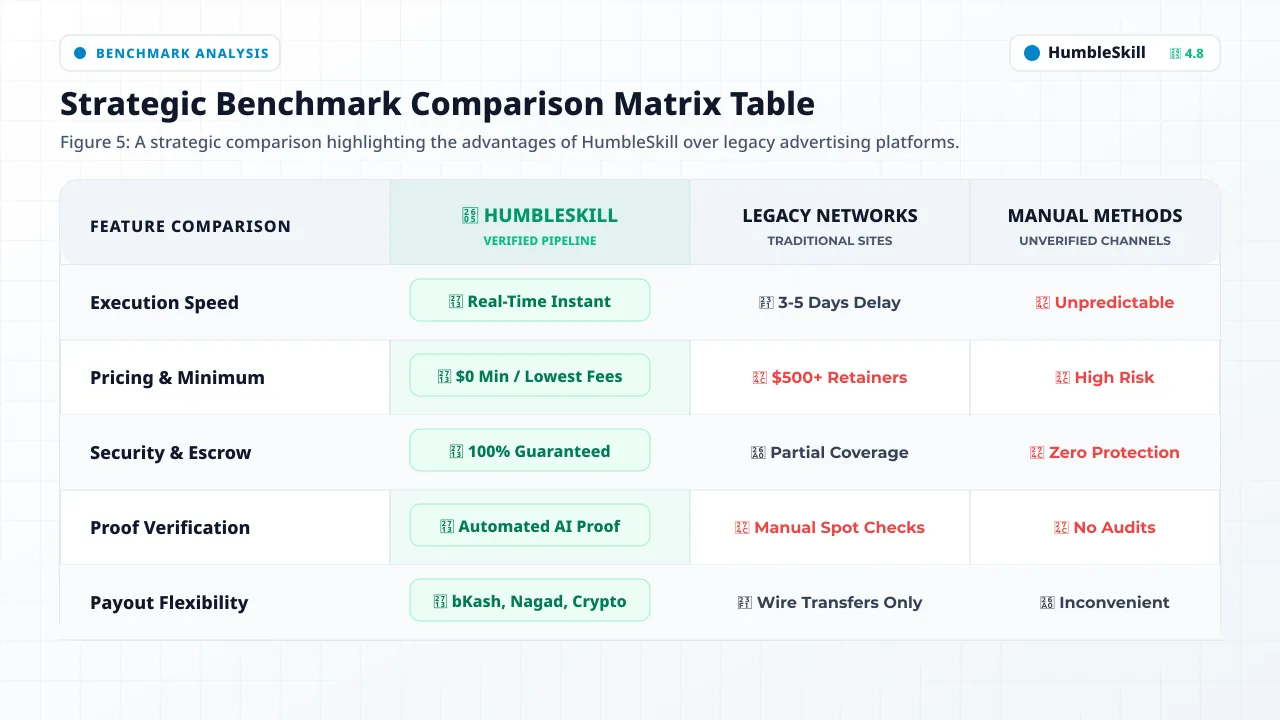
- Legacy Networks: Requires $500–$1,000 minimum monthly commitments per channel; rigid auto-billing setups; inflexible campaign allocation models on sub-$50 daily spends.
- Flexible Banner Advertising Marketplace: Low entry thresholds ($10–$50 starting budgets); absolute control over impression pacing; immediate reallocation across banner ads, micro-tasks, and direct traffic channels.
- Geographic Granularity: Precise targeting options allowing brands to isolate traffic down to the country, region, city, or Designated Market Area (DMA) level, preventing wasted spend in non-serviceable locations.
- Device and System Environments: Deep User-Agent parsing that segregates traffic by operating system (iOS, Android, Windows, macOS), device class (mobile, desktop, tablet), and specific browser engines.
- Audience Vectors and Intent: Historical engagement indexing that groups users by niche category affinities, allowing founders to buy banner ads online aimed specifically at high-intent cohorts.
- Standard IAB Display Banners: Universal format sizes—including the Leaderboard (728x90), Medium Rectangle (300x250), and Wide Skyscraper (160x600)—that seamlessly integrate across publisher placements to maintain high impression volume.
- Pop-under & Direct Navigation Placements: High-impact units that render in a distinct browser window behind the primary page, capturing user attention without interrupting active browsing tasks.
- Task-Linked & PTC Display Engines: Interactive ad units integrated into a pay per task advertising platform. By leveraging structures such as Website Surfing and PTC Ads, campaigns pair direct display visibility with verified user actions, generating guaranteed engagement.
- Effective Cost Per Acquisition (eCPA): Standard programmatic display often yields high CPM-to-conversion friction. Hybrid platforms combining display inventory with Website Surfing and PTC Ads deliver lower eCPA values by filtering out non-human traffic prior to user arrival.
- Bot Mitigation and Traffic Authenticity: Ad fraud costs advertisers billions annually. Leading task marketplaces integrate server-side fingerprinting, IP risk scoring, and mandatory time-on-page metrics to ensure that displayed banners are viewed by real humans rather than automated scripts.
- Granular Budget Management: Utilizing an advertising platform with flexible budget controls enables marketers to halt underperforming visual assets immediately and reallocate capital toward winning ad formats or high-performing worker demographics.
- Elimination of Bot Traffic & Ad Fraud: Task completion workflows require multi-step human validation, ensuring budget is allocated toward active, verified human users rather than automated scrapers.
- Enhanced Downstream Engagement: Users who interact visually with a banner and perform an explicit task demonstrate up to 4x higher 30-day retention rates compared to users arriving via passive misclicks.
- Predictable Financial Modeling: Operating an advertising platform for entrepreneurs with fixed task costs allows financial officers to forecast Customer Acquisition Costs (CAC) with precision.
- Contextual Alignment: Match display campaigns with content channels relevant to your customer demographic rather than buying generic site categories.
- Above-The-Fold (ATF) Positioning: Prioritize top-of-page placements and sticky sidebar units to maximize viewability rates, aiming for a minimum 70% viewability score across inventory placements.
- Geographic and Device Segmentation: Limit early ad iterations to key geographic regions and dominant device categories (mobile versus desktop) based on where your offer converts best.
- Frequency Capping: Set strict limits—typically 2 to 3 impressions per unique user every 24 hours—to prevent audience fatigue and protect your impression budget.
- Isolate Creative Variables: Test one element at a time—such as headline copy, visual style, or CTA button color—across identical audience segments to isolate performance drivers.
- Monitor Key Benchmarks: Track Click-Through Rate (CTR), Cost Per Click (CPC), and post-click Conversion Rate (CVR). Standard display banners typically average a 0.1% to 0.3% CTR, while specialized placements on a pay per task advertising platform or incentive network often produce significantly higher engagement rates.
- Prune Low-Performing Placements: Review publisher-level reporting every 48–72 hours. Pause placements delivering sub-baseline CTRs or high CPCs, reallocating budget into high-performing domains.
- Scale Spend Horizontally and Vertically: Once a campaign meets your target Cost Per Acquisition (CPA), scale spend vertically by raising daily budget limits on winning ad sets. Simultaneously, scale horizontally by introducing proven visual creatives to complementary ad networks.
- Local Creative Verification: Advertisers and ad networks utilize residential proxy pools to dynamically render banner ads across specific ZIP codes or municipalities. This ensures that dynamic regional offers, localized language translations, and currency formats display correctly to end users without landing on broken redirects or unintended default creatives.
- Anti-Cloaking Compliance Checks: Fraudulent publishers frequently show compliant banner ads to automated verification crawlers while serving low-quality or deceptive content to real users. By routing verification requests through rotating residential proxies, ad tech platforms can perform unannounced audit checks, discovering hidden cloaking scripts and protecting brand integrity.
- TCP/IP and Device Fingerprinting: Inspecting canvas data, browser headers, hardware concurrency, and WebGL parameters to verify that the request originates from a legitimate consumer device rather than a headless server instance.
- Behavioral Telemetry: Measuring mouse trajectories, touch-screen gesture velocity, scroll depth, and interaction delays prior to registering a paid impression or click event.
- Proxy Velocity and ASN Scoring: Cross-referencing active IP addresses against global threat databases and monitoring rapid IP rotation anomalies that signal automated proxy network abuse.
- Frictionless Global Crypto Payouts: Regional platforms frequently lock publisher earnings within localized payment rails, stifling global user participation. Modern networks integrate low-fee crypto withdrawals (such as USDT, Litecoin, and Payeer) alongside traditional channels, ensuring global worker liquidity and uninterrupted traffic availability.
- Integrated Digital Shop and Automated Contests: Combining a pay per task advertising platform with an internal digital product store generates circular velocity for capital. Content creators and micro-workers can instantly reinvest campaign earnings into display placements, purchase digital tools, or compete in automated leaderboard contests that elevate overall platform engagement.
- Granular Campaign Control: Rather than requiring rigid monthly contracts, an advertising platform with flexible budget settings enables real-time bid adjustments, custom geo-fencing, and precise impression capping.
- Initial Social Proof Generation: Direct task workers to follow brand channels, bookmark product listings, or interact with social posts to establish baseline social proof before scaling high-volume ad spends.
- Accelerated Onboarding Audits: Use custom tasks to incentivize real users to execute multi-step sign-up processes, gathering user experience feedback while simultaneously acquiring validated leads.
- Synergistic Funnel Mechanics: Display prominent banner creatives that highlight instant rewards for task completion, turning standard display ad units into direct response conversion engines.
- Leaderboard Competition: Setup daily, weekly, or monthly performance contests where participants earn points by viewing ads, referring new members, or completing verified tasks.
- Multi-Touch Brand Exposure: Run banner campaigns that promote contest prize pools, incentivizing users to revisit your landing pages multiple times throughout the contest lifecycle.
- Community Growth Loops: Offer tiered prize structures to incentivize top performers to share your brand across external networks, amplifying reach organically.
- Instant Liquidity: Capitalize on real-time sales revenue without waiting for traditional 14-day bank settlement cycles.
- Global Ad Scale: Merchants operating in unbanked or emerging markets can buy ad inventory globally without localized credit card restrictions.
- Reinvestment Loops: Automated merchant payout options enable vendors to instantly recycle earnings from digital product sales back into active banner campaigns via flexible advertising solutions.
- Direct inventory selection allowing advertisers to pick exact ad placement zones.
- Real-time telemetry and reporting on clicks, impressions, and click-through rates (CTR).
- Advanced anti-fraud engines that filter automated bot scripts before billing occurs.
- Modular self-serve campaign builders that support instant creative swapping and split-testing.
- 300x250 (Medium Rectangle): Best for in-article and embedded blog content placements, yielding top conversion rates across mobile and desktop.
- 728x90 (Leaderboard): Ideal for top-of-page header positioning, delivering immediate brand visibility upon initial DOM rendering.
- 160x600 (Wide Skyscraper): Highly effective for persistent sidebar scrolling, maintaining extended user viewability time.
- Creative Iteration & Dynamic Formats: Deploying multi-size HTML5 animated banners and responsive display assets to prevent creative fatigue, increase click-through rates (CTR), and maximize inventory fill rates across web and mobile platforms.
- Hybrid Conversion Funnels: Combining top-of-funnel visual impressions with direct micro-incentive actions to bridge the gap between initial brand discovery and downstream product adoption.
- Granular Budget Management: Utilizing flexible advertising solutions that allow real-time daily cap adjustments, granular demographic targeting, and impression pacing to protect operational liquidity.
- Cross-Channel Synergy: Coupling traditional display placements with reward-driven traffic, user feedback tasks, and community contests to turn passive viewers into active brand advocates.
- W3C Web Standards & Security Architecture
- Cloudflare Learning Center: Proxies, Networking and Security
- Wikipedia: Digital Economy & Micro-work Systems
Defining Banner Advertising Marketplace
For early-stage founders, growth hackers, and bootstrapped marketers, customer acquisition presents a persistent challenge: balancing limited capital against the high costs of digital media. Big-tech ad exchanges frequently require steep minimum spends, complex configuration, or high cost-per-click (CPC) rates that drain early runways. A specialized banner advertising marketplace solves this by offering an accessible, direct-buy advertising platform for entrepreneurs looking for direct control over their promotional spend.
At its technical core, a display ad marketplace acts as a two-sided network. On the supply side, website owners and digital property managers publish their ad space inventory—such as top-of-page leaderboards (728x90), medium rectangles (300x250), or mobile banners (320x50)—alongside real-time data regarding traffic volume, geographic distribution, and niche categorization. On the demand side, startups browse this inventory to buy banner ads online that align precisely with their target customer profile.
What makes this model a vital budget friendly advertising platform for early-stage companies is the agility it provides. Modern growth teams rarely rely on static display ads alone. By using flexible advertising solutions available through platforms like the HumbleSkill Homepage, companies can cross-pollinate their visual banner campaigns with incentivized engagement channels.
For instance, when businesses use Advertise Your Business and Buy Traffic frameworks, they can run display ads side-by-side with verified micro-tasks. This hybrid approach allows an emerging web app or e-commerce store to build top-of-funnel brand awareness through display units while simultaneously securing lower-funnel user registrations, app installs, or feedback surveys.
By utilizing structured advertising packages for startups that adapt to dynamic campaign targets, marketing managers gain predictable CPM (cost per mille) and CPC rates without being locked into expensive enterprise ad tech contracts.
Note: Service packages and pricing are dynamic and subject to update or custom project scopes.
Understanding the Modern Banner Advertising Marketplace Model

Navigating the mechanics of a modern banner advertising marketplace requires understanding how digital inventory transitions from a publisher's site space into a high-converting growth vector for early-stage companies. Rather than relying on static, manual negotiations, today's digital ad infrastructure operates through automated clearinghouses that aggregate traffic, verify user authenticity, and match buyer intent with appropriate publisher real estate in real time.
How Digital Display Ad Marketplaces Connect Advertisers and Publishers
At its structural core, a modern display ad marketplace functions as a multi-sided ecosystem bridging two distinct user bases: digital publishers seeking to monetize web traffic and growth-focused businesses aiming to acquire customers. The infrastructure relies on a continuous data loop that processes ad requests, evaluates buyer criteria, and serves visual creatives in fractions of a second.
Publishers integrate ad tags, header bidding scripts, or SDKs into their site architectures. When a user visits the publisher's page, these scripts send an automated impression request to the marketplace. This request contains contextual metadata, such as domain category, user geography, device type, and viewport dimensions.
Concurrently, advertisers use the marketplace interface to buy banner ads online efficiently. The platform evaluates active buy-side campaigns against incoming publisher supply to select winning creatives based on targeting parameters and pricing rules.
For founders who need to Advertise Your Business and Buy Traffic, this architecture removes the traditional friction of direct seller outreach, providing immediate access to pre-vetted publisher inventory.
The Shift from Direct Deals to Programmatic & Micro-Ad Platforms
Historically, buying online banner space required direct deal-making, manual Insertion Orders (IOs), and prolonged contractual commitments. This legacy framework heavily favored large enterprise brands with hefty minimum spend commitments, leaving resource-constrained startups unable to access quality placement channels.
The market evolved through programmatic real-time bidding (RTB) protocols, opening up automated auctions. However, even programmatic ecosystems often impose high technology fees, opaque data markups, and fraud vectors like ghost sites and automated bot farms.
To solve these inefficiencies, modern direct-response networks and specialized micro-ad platforms have emerged. These platforms offer flexible advertising solutions tailored specifically for lean growth teams.
1. Direct Sponsorships (Legacy): High overhead, manual IO contracts, fixed placement fees, and rigid minimum budgets exceeding $10,000/month.
2. Programmatic Exchanges (Standard): High automation and massive reach, but subject to complex ad tech stacks, hidden intermediary fees, and brand safety concerns.
3. Micro-Ad & Task Platforms (Modern): High transparency, low minimum spend thresholds, and direct pay-performance mechanics designed as a budget friendly advertising platform for agile execution.
By shifting toward specialized marketplaces, emerging companies can leverage an advertising platform with flexible budget controls, testing creative messaging on micro-scales before scaling ad spend. Furthermore, combining standard display units with alternative engagement models—such as a pay per task advertising platform—allows teams to combine brand awareness with verified user actions.
Key Terminology: CPM, CPC, Task-Based Ads, and Impressions
Evaluating performance across a banner advertising marketplace requires a firm handle on foundational media-buying models and performance metrics. Choosing the wrong buying model can rapidly burn startup capital without delivering clear acquisition outcomes.
Selecting an advertising platform for entrepreneurs that supports hybrid buying models allows growth teams to deploy structured advertising packages for startups. Early-stage companies can run brand-awareness banners on a low CPM baseline while running concurrent cost-per-click or task-based campaigns to directly drive user acquisition.
Note: Service packages and pricing are dynamic and subject to update or custom project scopes.
Why Startups and Entrepreneurs Need Flexible Advertising Solutions

Early-stage ventures operate under severe burn rate constraints where every dollar spent must directly correlate to measurable traction, user onboarding, or pipeline velocity. Traditional growth playbooks often fail bootstrapped founders because legacy programmatic channels demand significant upfront capital before their optimization algorithms achieve statistical significance. To survive early go-to-market phases and maintain financial runway, emerging companies need flexible advertising solutions that protect capital reserves while supplying steady, highly targeted traffic.
Overcoming High Ad Spend Barriers on Legacy Ad Networks
Enterprise ad networks like Google Ads and Meta Ads are architected to serve corporations with substantial marketing budgets. For early-stage companies, these platforms introduce severe operational and financial friction:
By shifting user acquisition strategies to a specialized display ad marketplace, founders eliminate complex RTB bidding wars and retain absolute authority over campaign spending caps. Utilizing an advertising platform with flexible budget settings ensures ad delivery scales in direct alignment with verified engagement, preventing runaway ad spend and protecting early cash flow.
Advertising Packages for Startups with Scalable Budgets
Unpredictable capital influxes require modular marketing strategies rather than rigid monthly retainers. Modular advertising packages for startups provide the agility required to test positioning, refine value propositions, and instantly pivot spend based on real-time conversion feedback.
When growth leads combine traditional display inventory with a pay per task advertising platform, they build a highly efficient multi-touch funnel. A founder can launch visual display banners to generate widespread awareness, analyze real-time click-through metrics, and immediately pivot resources into direct-action campaigns without entering multi-month programmatic contracts.
Growth-focused platforms—including options to Advertise Your Business and Buy Traffic on HumbleSkill—enable marketing teams to run targeted campaigns starting with entry-level commitments tailored to lean operational budgets.
Note: Service packages and pricing are dynamic and subject to update or custom project scopes.
Evaluating operational models highlights the stark structural advantages modern marketplaces offer over traditional ad channels:
Maximizing ROI on a Budget Friendly Advertising Platform
Operating effectively within a budget friendly advertising platform requires systematic creative iteration and disciplined performance monitoring. Instead of locking capital into unproven ad creatives, founders should execute structured, low-risk testing protocols whenever they buy banner ads online.
To maximize capital efficiency on an advertising platform for entrepreneurs, leverage this step-by-step optimization model:
1. Isolate Creative Variables: Launch initial campaigns across standardized dimensions like 300x250 medium rectangles and 728x90 leaderboards. Keep messaging constant while testing three distinct visual concepts (e.g., product UI screenshots, graphic illustrations, text-heavy contrast banners) to identify visual click drivers.
2. Establish Statistical CTR Baselines: Direct traffic to creatives until each placement reaches 5,000 to 10,000 impressions. Benchmark ad performance, aiming for a stable baseline click-through rate (CTR) between 0.35% and 0.75% before increasing channel allocation.
3. Layer Micro-Tasks for Accelerated Funnels: Pair ambient display banner placements with direct-response micro-tasks—such as account creation, content engagement, or app installs—to secure immediate conversions while passive visual awareness builds.
4. Prune and Reallocate Volatile Assets: Immediately pause ad variants performing below a 0.15% CTR after 2,000 impressions. Reallocate freed campaign spend toward high-performing banner creatives or high-converting placement categories.
By pairing structured creative testing with custom spend parameters, startups convert display channels from unpredictable expense centers into predictable, cost-effective growth engines.
Core Features of a High-Performing Display Ad Marketplace
Harnessing display channels into scalable acquisition loops requires an infrastructure capable of handling high-throughput ad requests with surgical precision. Evaluating a modern banner advertising marketplace means scrutinizing the engine beneath the hood—specifically how it handles audience filtering, click integrity, and creative delivery. For growth-stage teams, selecting an advertising platform for entrepreneurs that combines flexible spend parameters with high-fidelity tracking is the essential bridge between baseline creative testing and long-term user growth.
Advanced Demographic and Geographic Targeting Capabilities
To maximize return on ad spend (ROAS), startups must filter out non-converting traffic before an impression request resolves. Leading display platforms utilize edge-computing lookup tables to resolve IP routing, device telemetry, and browser user-agents in under 10 milliseconds.
Key targeting parameters required for startup growth include:
Deploying these parameters within a budget friendly advertising platform ensures that every dollar spent targets the profiles most likely to convert.
Real-Time Analytics, Click Verification, and Anti-Fraud Systems
In open web advertising, non-human traffic (NHT) and click manipulation pose continuous risks to campaign efficiency. A high-performing display ad marketplace must maintain automated defensive layers to audit impression quality and verify click authenticity in real time.
Effective traffic verification relies on a triple-stage validation mechanism:
1. Biometric and Interaction Telemetry: Passive monitoring of client-side interaction metrics—such as mouse trajectory vectors, scroll acceleration, and touch event intervals—to distinguish real human users from automated headless scripts.
2. Network Reputation Auditing: Immediate cross-referencing of inbound requests against live databases of known datacenter IP blocks, TOR exit nodes, residential proxy networks, and commercial VPN pools.
3. Click Velocity and Rate Limiting: Algorithmic suppression that flags and discards rapid-fire conversion attempts originating from duplicate session tokens or identical hardware fingerprints.
Granular, real-time analytics dashboards complement these anti-fraud measures. When teams choose to Advertise Your Business and Buy Traffic, access to un-delayed event streams, verified click-through rates (CTR), and true effective cost-per-click (eCPC) metrics enables instant tactical optimization.
Multi-Format Ad Units: Banners, Pop-unders, and Task-Linked Displays
Diversifying ad units helps bypass banner blindness and captures target audiences across different stages of the conversion funnel. High-performing networks offer flexible advertising solutions that blend classic display standards with modern, high-engagement inventory.
Leveraging an advertising platform with flexible budget settings gives startups the control needed to test various placement types side-by-side. Whether launching curated advertising packages for startups or building custom impression schedules, deploying a multi-format strategy ensures optimal efficiency across all target channels.
Note: Service packages and pricing are dynamic and subject to update or custom project scopes.
Comparative Analysis: Traditional Ad Networks vs Micro-Task Ad Marketplaces

Navigating the modern growth ecosystem requires founders to look beyond generic impression metrics and evaluate how traffic is generated, filtered, and converted. Choosing the right banner advertising marketplace depends heavily on whether a startup needs passive brand visibility or verified user interaction. While conventional display ad networks rely on passive programmatic placements across third-party websites, micro-task advertising platforms and direct ad marketplaces combine visual exposure with incentivized engagement to drive measurable user action.
Direct Banner Placements vs Paid Engagement Models
Traditional display ad networks function primarily on automated real-time bidding (RTB) protocols, selling digital billboard space across millions of publisher sites on a Cost Per Mille (CPM) or Cost Per Click (CPC) basis. While this model offers broad reach, it suffers from rising ad-blocker adoption, low click-through rates (CTR)—often hovering below 0.1%—and significant banner blindness. Early-stage companies using a standard display ad marketplace frequently burn through seed capital paying for impressions that never translate into actual site navigation or user registrations.
In contrast, micro-task ecosystems and hybrid traffic networks introduce active intent. When media buyers buy banner ads online through a pay per task advertising platform, visual impressions are paired with incentivized actions such as verified timer-based site surfing, signup flows, or application testing. This fundamentally shifts the advertiser’s economic model from paying for passive exposure to funding confirmed engagement. For founders seeking an advertising platform for entrepreneurs, this distinction ensures every dollar spent correlates directly to user interaction rather than unverified page impressions.
Platform Feature Matrix (Table 1)
To help media buyers select the optimal channel for their growth campaigns, the following feature matrix evaluates leading networks across minimum capital requirements, format flexibility, security telemetry, and overall budget adaptivity.
| Platform Name | Entry Cost / Min Deposit | Primary Ad Formats | Fraud Protection Mechanisms | Budget Flexibility & Control |
| :--- | :--- | :--- | :--- | :--- |
| HumbleSkill | $1.00 Minimum | Banners, PTC Surfing, Video Ads, Micro-Tasks | Dual IP/Proxy Detection, Proof-of-Work Verification | Dynamic Budget Scaling & Custom Packages |
| SproutGigs | $5.00 Minimum | Micro-Tasks, Employer Gigs | Manual Proof Approval, Rating Systems | Fixed Rate Per Task |
| Microworkers | $10.00 Minimum | Micro-Tasks, Data Categorization | Admin Verification, Worker Qualification | Campaign-Level Budget Limits |
| Clickworker | $10.00 Minimum | App Testing, AI Data Tasks | UHRS Quality Checks, Spam Monitoring | Enterprise Custom Quotes |
| TimeBucks | $5.00 Minimum | PTC Ads, Push Notifications, Surveys | Automated Bot Filtering, Captcha Verification | Fixed Daily Budgets |
| Freecash | Custom Advertiser Rates | Offerwall, App Installs | Anti-Fraud Risk Scoring, Fraud Scoring API | Performance-Based Payouts |
| Swagbucks | Enterprise Minimums | Offerwall, Video Views | Proactive Account Audits, Geofencing | High Minimum Spend Requirement |
| Toloka.ai | $20.00 Minimum | Machine Learning Tasks, Data Annotation | Behavioral Fraud Analytics, Skill Tests | Tiered API Pricing |
Evaluating Return on Ad Spend (ROAS) Across Platforms
Maximizing Return on Ad Spend (ROAS) demands a disciplined approach to unit economics, especially for self-funded ventures operating within tight capital constraints. Utilizing a budget friendly advertising platform allows performance marketers to run real-time micro-experiments, testing creative assets and landing page conversion rates without incurring heavy upfront liabilities.
When auditing ROAS performance across networks, growth managers should benchmark campaigns using three critical parameters:
By pairing visual banner placements with actionable micro-tasks, startups can build scalable flexible advertising solutions that outperform passive ad networks. Establishing structured testing parameters across these channels guarantees that advertising packages for startups yield sustainable user growth and maximize long-term lifetime value.
Note: Service packages and pricing are dynamic and subject to update or custom project scopes.
Combining Banner Ads with Pay Per Task Advertising Models

While optimizing campaign parameters helps lower acquisition costs on standard display networks, reliant reliance on passive banner impressions alone often leads to banner blindness and stagnant click-through rates. To bridge the gap between visual impressions and tangible conversion actions, modern growth strategies combine traditional display inventory within a banner advertising marketplace alongside micro-task mechanics. Merging visual branding with interactive tasks converts passive viewers into active participants, establishing a high-converting growth architecture tailored for resource-conscious startups.
What is a Pay Per Task Advertising Platform?
A pay per task advertising platform operates on a performance-first architecture where advertisers pay exclusively for verified user actions rather than unverified impressions or accidental clicks. Unlike standard display networks that trade on CPM (Cost Per Mille) or CPC (Cost Per Click) metrics, task-based advertising mandates that users complete specific, trackable micro-interactions—such as signing up for a newsletter, testing a software beta, downloading a mobile application, or engaging with specific media content—before payout occurs.
For early-stage companies and indie developers, utilizing an advertising platform with flexible budget constraints reduces financial risk. Instead of allocating thousands of dollars toward speculative display impressions on legacy ad networks, growth teams can set strict unit costs for precise outcomes. Platforms that incorporate crowdsourced labor models—such as users looking to Earn Money Online via Micro Tasks—allow founders to secure immediate user testing, social validation, and product telemetry while maintaining control over overall ad spend.
Synergizing Visual Banners with Direct User Micro-Tasks
Combining visual banners with direct micro-tasks creates a dual-touchpoint acquisition funnel that addresses both brand recall and direct response simultaneously. In a isolated display ad marketplace, banner ads work primarily as top-of-funnel (TOFU) awareness drivers. However, when integrated with a pay-per-task incentive architecture, visual graphics serve as the immediate contextual anchor that primes the user before they perform a specific action.
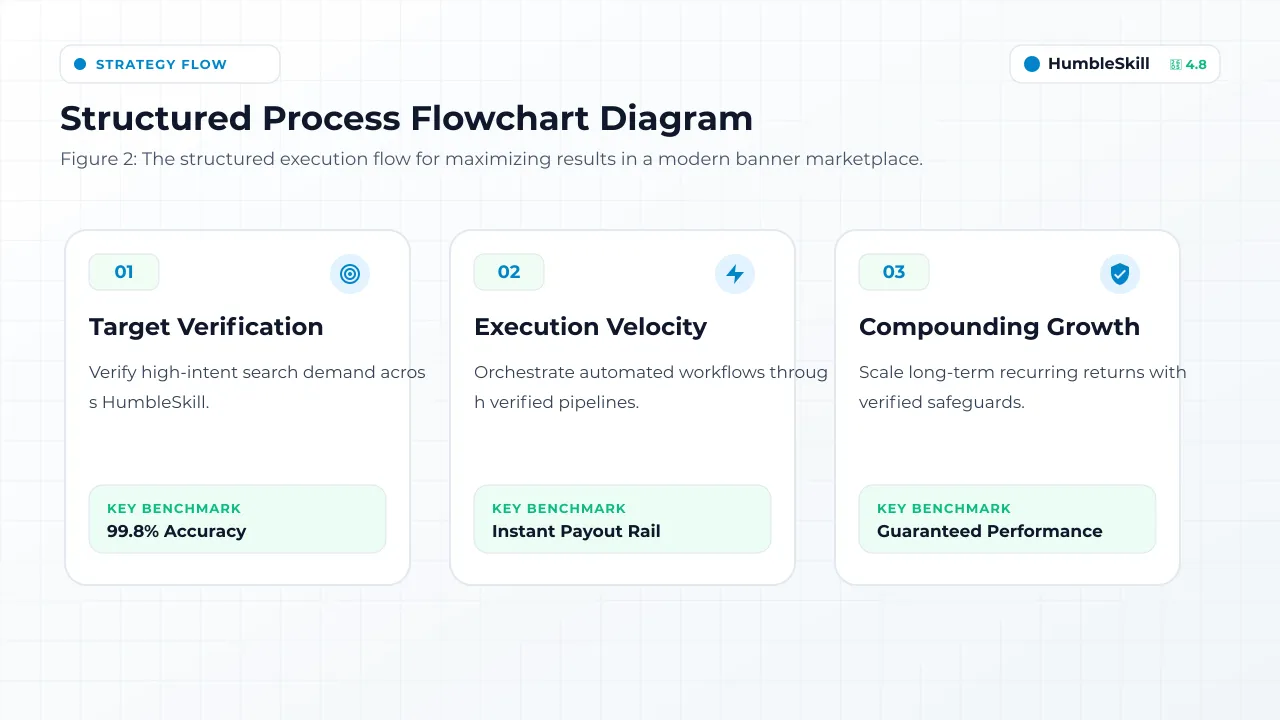
To implement this dynamic synergy effectively, growth marketers utilize a structured three-tier execution flow:
1. Visual Priming (Top of Funnel): The user encounters a compelling, high-resolution visual banner across a display ad marketplace. The visual assets communicate core brand value propositions, establishing immediate baseline brand equity.
2. Action Prompting (Middle of Funnel): Rather than directing the user to a generic landing page with high bounce rates, the banner routes traffic directly to an incentivized task workflow. The user is prompted to execute a structured action (e.g., verifying an email address, trying a feature demo, or providing product feedback).
3. Verification & Retargeting (Bottom of Funnel): Automated API validation or proof-of-work protocols verify completion of the micro-task. Once verified, the advertiser gains a warm, verified user contact or active user session at a fraction of standard acquisition costs.
This integrated approach bridges the gap between passive impression-based marketing and aggressive performance marketing, giving companies access to highly flexible advertising solutions without compromising target efficiency.
Driving Guaranteed Action and Brand Awareness Simultaneously
The primary bottleneck of relying solely on option to buy banner ads online through conventional networks is the disparity between viewability and intent. Industry benchmarks show that average display ad click-through rates hover around 0.35%, with conversion rates dropping even lower. By deploying campaigns through an integrated pay per task advertising platform, startups achieve guaranteed metrics that stabilize unit economics.
By combining visual presence with verified micro-tasks, founders build an optimized funnel engineered for retention:
Ultimately, combining visual banner marketplace inventory with micro-task models offers a budget friendly advertising platform framework for emerging brands. This hybrid strategy generates guaranteed user actions while continuously reinforcing brand visibility across targeted publisher networks.
Note: Service packages and pricing are dynamic and subject to update or custom project scopes.
Step-by-Step Guide: Buying Banner Ads Online for Maximum Conversions
Executing an efficient display campaign requires bridging the gap between strategy and technical execution. For early-stage companies and lean marketing teams, managing media spend efficiently on a banner advertising marketplace means standardizing your campaign deployment workflow. By combining high-converting visual assets with precise targeting parameters, bootstrapped founders can compete directly with enterprise brands without exhausting capital.
Designing Click-Worthy Visual Creatives and Copy
High-converting display banners rely on clarity, visual hierarchy, and immediate visual impact. Because display inventory competes constantly for user attention, custom graphics must communicate your main selling point in under two seconds.
1. Establish a High-Contrast Visual Focus: Use vibrant visual elements that contrast with common site backgrounds. Maintain an uncluttered composition with a single focal image or graphic, a succinct value proposition (under eight words), and a high-contrast Call-To-Action (CTA) button.
2. Standardize on High-Yield Ad Dimensions: Focus your design resources on high-performing sizes: the 300x250 Medium Rectangle, 728x90 Leaderboard, 160x600 Wide Skyscraper, and 320x50 Mobile Leaderboard. These formats represent the majority of available impression inventory across publishers.
3. Draft Direct, Action-Oriented Copy: Avoid vague branding phrases. Frame copy around immediate user benefits (e.g., "Automate Your Invoicing in 5 Minutes" instead of "Next-Gen Billing Solutions").
If you lack internal media designers, you can outsource asset creation through scalable solutions such as Freelance Gigs and Digital Services to build conversion-focused banner sets across standard formats.
Note: Service packages and pricing are dynamic and subject to update or custom project scopes.
Selecting the Right Ad Placement and Targeting Parameters
Once your creative assets are produced, media buying on a display ad marketplace requires strategic targeting configuration to avoid wasteful ad spend. Modern networks offer robust filtering options designed specifically to deliver flexible advertising solutions for startups.
Leveraging an advertising platform for entrepreneurs allows founders to set micro-budgets and test audience segments incrementally. Utilizing self-serve options via Advertise Your Business and Buy Traffic provides a practical launchpad to test placement performance before committing larger capital reserves.
A/B Testing, Optimizing CTR, and Scaling Winning Campaigns
Optimization is an iterative process. When you buy banner ads online, launch your initial tests using a split-testing framework to establish baseline metrics.
By taking advantage of a budget friendly advertising platform with flexible budget controls, startups can convert low-cost display impressions into reliable, performance-driven growth channels.
Advanced Targeting: Utilizing Residential Proxies and Geolocation Filters
To bridge the gap between high-volume display impressions and predictable customer acquisition, modern growth teams must look beyond standard demographic filters. Achieving high conversion efficiency across a modern banner advertising marketplace requires deep technical validation of ad delivery and traffic routing. As startups scale their ad spend, ensuring that localized banners land in front of actual human eyes—rather than automated datacenter scripts or misrouted traffic—becomes paramount.
The Role of Residential Proxies in Traffic Verification and Localized Ads
Residential proxies act as a critical infrastructure layer in modern digital advertising, routing requests through legitimate Internet Service Provider (ISP) IP addresses assigned to real households. When marketers buy banner ads online, relying solely on publisher-reported location data often introduces blind spots, as bad actors can spoof location metadata or use datacenters to simulate local traffic.
In a robust display ad marketplace, residential proxies are leveraged in two primary ways:
By enforcing real-time IP verification, an advertising platform for entrepreneurs guarantees that hyper-local campaigns serve genuine regional audiences, maximizing the yield on every dollar allocated.
Targeting Micro-Markets in Developing and Tier-1 Economies
Precision targeting is no longer confined to broad country-level filters. Early-stage startups often achieve their highest return on ad spend (ROAS) by isolating high-converting micro-markets—ranging from affluent urban centers in Tier-1 nations to fast-growing mobile-first regions across developing economies.
Deploying flexible advertising solutions allows media buyers to adjust bid density based on granular location telemetry. A tech company offering cross-border payment software, for instance, might target tech hubs in Lagos or Nairobi alongside financial districts in London or Singapore. Utilizing advertising packages for startups equipped with dynamic geolocation controls lets founders test micro-audiences systematically without exhausting capital on unsegmented impressions.
1. Define Granular Geo Parameters: Isolate target campaigns by city, administrative region, or specific carrier subnets (ASNs) rather than broad geographic blocks.
2. Deploy Localized Ad Variants: Align visual messaging and value propositions directly with regional economic pain points and currency references.
3. Monitor Conversion Velocity by Region: Continuously reallocate campaign budgets toward the top-performing 20% of micro-locations.
Marketers looking to launch geo-targeted campaigns can explore tailored options to Advertise Your Business and Buy Traffic using granular geographic filters built for immediate performance scaling.
Ensuring Real Human Impressions vs Bot Traffic
Bot traffic remains one of the largest source leaks in digital marketing budgets, with automated scripts, headless browsers, and click farms inflating impression counts. To counter this, advanced ad delivery platforms implement multi-layered traffic validation systems that distinguish synthetic datacenter traffic from authentic user activity.
Datacenter IP addresses are easily flagged and blocked, which is why sophisticated fraud rings attempt to route bot networks through residential IP space. To defeat these tactics, modern verification networks combine IP reputation metrics with advanced behavioral analysis:
When utilizing specialized ad distribution models like a pay per task advertising platform or incentivized engagement networks, strictly enforcing residential verification ensures that users interacting with offers—such as those learning how to Earn Money Online via Micro Tasks—are verified human operators operating from authenticated residential connections.
By leveraging a budget friendly advertising platform operating on an advertising platform with flexible budget architectures, startups can insulate themselves from ad fraud, verify geographic alignment, and turn display media into a reliable revenue driver.
Note: Service packages and pricing are dynamic and subject to update or custom project scopes.
Industry Competitor Landscape: Regional and Global Marketplace Comparison
Evaluating where to deploy promotional capital requires a rigorous structural analysis of the global and regional ad marketplace ecosystem. While legacy display networks deliver massive impression volume, early-stage ventures frequently find themselves priced out by high spend thresholds or vulnerable to automated bot networks. Selecting the ideal banner advertising marketplace involves balancing campaign targeting precision, instant publisher payout mechanics, anti-fraud infrastructure, and integrated growth tools.
Regional vs Global Ad Marketplace Ecosystems
The modern web marketing landscape is split across three distinct operating models: enterprise AI data platforms, localized regional micro-task portals, and hybrid ad-growth marketplaces. Specialized enterprise networks such as Remotasks, Appen, Outlier.ai, DataAnnotation.tech, and Prolific prioritize complex machine learning data validation, completely ignoring small business display ad inventory. Conversely, regional portals like Kajpoka, Workupjob, Microjob.bd, Banglatask, and Hunterjobwork cater to specific local worker bases, but often suffer from legacy user interfaces, limited banner display formats, and restrictive localized banking rails.
For emerging ventures requiring flexible advertising solutions, intermediate hybrid platforms provide a far more dynamic environment. A purpose-built advertising platform for entrepreneurs must bridge the gap between global micro-worker talent and high-converting display placements. By unifying visual media placement with direct engagement mechanisms, platforms like HumbleSkill function as a versatile display ad marketplace. Founder teams can buy banner ads online while simultaneously commissioning user feedback, generating verified impressions, and driving genuine human engagement without enterprise overhead.
Marketplace Infrastructure Comparison (Table 2)
To evaluate media reach, payout flexibility, and promotional features across competing platforms, the operational comparison below highlights structural differences between regional sites, legacy task platforms, enterprise AI networks, and modern multi-utility marketplaces.
| Platform Category | Example Platforms | Primary Media & Task Focus | Payment & Crypto Integration | Integrated Shop & Contests | Startup Accessibility |
| :--- | :--- | :--- | :--- | :--- | :--- |
| Regional Task Portals | Kajpoka, Workupjob, Microjob.bd, Banglatask, Hunterjobwork | Local micro-tasks, basic social actions | Local mobile wallets, manual bank wire | Rare or non-existent | Low geographic scale |
| Legacy Task Platforms | SproutGigs, Microworkers, Clickworker, Toloka | Micro-work execution, basic banner embeds | PayPal, Skrill, select crypto options | Basic referral bonuses | Moderate acquisition costs |
| Enterprise AI Networks | Remotasks, Appen, Outlier.ai, DataAnnotation, Prolific | LLM RLHF training, data annotation, survey research | Direct bank transfer, PayPal | None (worker-only focus) | High spend thresholds |
| Hybrid Display & Task Ecosystem | HumbleSkill | Banner ads, PTC surf campaigns, micro-gigs, digital shop | Multi-currency, instant crypto withdrawals | Native digital shop & contest engines | High accessibility, custom budgets |
Key Differentiators in Creator & Advertiser Ecosystems
When selecting a budget friendly advertising platform, performance extends beyond simple cost-per-click metrics. Modern platforms distinguish themselves by incorporating integrated digital commerce, frictionless payout rails, and interactive community mechanics that sustain continuous worker activity.
By utilizing structured advertising packages for startups, lean teams can test visual banner concepts, validate conversion funnels, and scale traffic on demand. Whether your primary strategy is acquiring visual ad real estate or empowering users to earn money online via micro tasks, participating in a multi-utility marketplace maximizes output while mitigating budget inefficiency.
Note: Service packages and pricing are dynamic and subject to update or custom project scopes.
Unlocking Multi-Channel Growth: Tasks, Gigs, and Contests
Relying solely on impression-based display ads can limit a startup’s initial conversion momentum. While a modern banner advertising marketplace provides instant brand visibility, pairing static display impressions with interactive engagement mechanics accelerates user acquisition across the entire sales funnel. By integrating targeted micro-tasks, bespoke creator services, and gamified contests into your marketing operations, an advertising platform for entrepreneurs transforms passive banner viewers into active product advocates.
Leveraging Micro-Tasks for Instant Engagement Boosts
Banner ads excel at building top-of-funnel awareness, but converting cold traffic into registered users often requires an extra incentive layer. Integrating a pay per task advertising platform alongside your banner campaigns creates an immediate engagement bridge. Instead of waiting for users to organically navigate from a display banner to an onboarding flow, micro-tasks incentivize specific micro-conversions—such as joining a Telegram community, completing an onboarding wizard, or testing a newly deployed web feature.
To maintain optimal return on ad spend (ROAS), structure your campaigns using Advertise Your Business and Buy Traffic options to segment display traffic alongside task workflows. This multi-pronged deployment allows early-stage founders to run flexible advertising solutions without committing thousands of dollars to unproven customer acquisition channels.
Freelance Gigs for Custom Banner Design and Copywriting
A high-performing display ad relies heavily on visual hierarchy, precise typography, and compelling value propositions. Startups using a display ad marketplace frequently make the mistake of launching low-quality or generic ad creatives, leading to ad fatigue and depressed click-through rates (CTR). Accessing on-demand design and copy talent directly within the ecosystem eliminates production bottlenecks.
1. High-Converting Ad Creative Sourcing: Hire specialist designers to craft standard IAB ad units (e.g., 728x90 Leaderboard, 300x250 Medium Rectangle, 160x600 Wide Skyscraper) optimized for rapid visual processing on both desktop and mobile layouts.
2. Localization and Direct-Response Copywriting: Utilize freelance copywriters to draft localized value propositions, urgency-driven call-to-actions (CTAs), and sharp micro-copy tailored to specific geographic demographics.
3. A/B Testing Asset Pipelines: Commission creative variations featuring distinct color schemes, button styles, and hero images to continuously test CTR performance against control assets.
Leveraging specialized creators via Freelance Gigs and Digital Services ensures your startup can deploy polished, professional media assets without maintaining expensive in-house design overhead.
Note: Service packages and pricing are dynamic and subject to update or custom project scopes.
When evaluating advertising packages for startups, combining custom asset creation with targeted placement guarantees that every dollar spent to buy banner ads online yields maximum brand impact and higher baseline interaction rates.
Gamifying Engagement with Sponsored Contests
Gamification provides a powerful framework for driving viral growth and brand recall. By launching sponsored contests across a budget friendly advertising platform, bootstrapped ventures can incentivize user-generated content, referral loops, and sustained community engagement at a fraction of traditional media costs.
Deploying contests on an advertising platform with flexible budget controls allows growth marketers to set fixed rewards caps while maximizing total touchpoints. When paired with high-impact banners across a well-monetized network, gamified contests turn passive viewer traffic into a predictable, self-sustaining customer acquisition channel.
E-Commerce Integration: Promoting Digital Shop Items via Banner Ads
Building upon interactive engagement channels, modern digital shop owners must capitalize on high-intent visual impressions to convert immediate interest into transactional revenue. For sellers of digital goods, software-as-a-service (SaaS) tools, online templates, and downloadable assets, combining targeted display placements with streamlined checkout funnels provides a predictable route to high-margin sales. Utilizing a robust banner advertising marketplace allows creators to display high-converting assets directly to audiences already primed for digital consumption.
Direct-to-Product Advertising Strategies
Traditional e-commerce funnels often suffer from multi-stage drop-offs. When selling digital inventory, direct-to-product banner strategies eliminate unnecessary intermediary steps, sending users straight to high-converting product detail pages or single-click checkout portals.
To maximize click-through rates (CTR) and conversion rates (CR) using a display ad marketplace, sellers should deploy structured ad frameworks:
1. High-Contrast Asset Design: Utilize explicit visual cues highlighting the digital deliverable (such as a 3D mockup of an e-book, source code snippet, or UI kit) paired with dynamic price callouts.
2. Frictionless Landing Alignment: Ensure the design, headline, and offer on the banner perfectly match the destination page to maintain message match and lower bounce rates.
3. Micro-Offer Testing: Leverage advertising packages for startups to test lower-priced entry products ($5 to $20) before re-targeting buyers with core or subscription offerings.
By taking advantage of an advertising platform with flexible budget controls, small businesses can run micro-experiments across niche network inventory without committing massive upfront capital.
Monetizing Digital Products and Instant Downloads
Digital products—such as design assets, specialized scripts, operational templates, and technical guides—yield near-zero marginal distribution costs. Consequently, acquiring customers via paid visual ads yields rapid scalability once a baseline return on ad spend (ROAS) is established.
Through Advertise Your Business and Buy Traffic, merchants can launch campaigns targeting active digital consumers. Integrating banner placements alongside micro-task ecosystem touchpoints—such as a pay per task advertising platform—helps sellers capture users who are actively engaged online and receptive to immediate digital utilities.
Sellers offering digital services can also cross-promote through customized marketplace listings. For instance, creators offering bespoke design or technical execution can showcase their solutions on Freelance Gigs and Digital Services while running contextual banners to funnel external traffic into their listings.
Note: Service packages and pricing are dynamic and subject to update or custom project scopes.
Seamless Crypto Withdrawals and Payout Flexibility for Merchants
A significant bottleneck for cross-border e-commerce merchants and digital entrepreneurs involves international payment processing fees, rolling reserves, and currency conversion overhead. Modern ad networks address this friction by integrating Web3 and cryptocurrency payment gateways directly into the merchant dashboard.
An advertising platform for entrepreneurs that supports decentralized and multi-currency transactions allows shop owners to buy banner ads online using popular cryptocurrencies like USDT, Bitcoin, or Litecoin. This structural flexibility provides key operational advantages:
By combining a budget friendly advertising platform with borderless cryptographic payouts, digital store owners create an autonomous, self-sustaining loop of customer acquisition, immediate digital delivery, and friction-free reinvestment.
Frequently Asked Questions About Banner Advertising Marketplaces
Common Questions on Ad Spend, Targeting, and ROI
Navigating a modern banner advertising marketplace requires a clear understanding of pricing dynamics, fraud prevention, ad formatting, and multi-channel campaign integration. Early-stage founders, media buyers, and growth marketers frequently encounter strategic decision points when attempting to maximize return on ad spend (ROAS) across decentralized and self-serve display platforms. The following detailed queries address the core technical and tactical considerations essential for running profitable campaigns on an advertising platform for entrepreneurs.
Detailed Answers to Top Search Queries
❓ How much does it cost to buy banner ads online?
Answer: Pricing to buy banner ads online depends heavily on the billing architecture (CPM, CPC, or flat-rate direct buys) and publisher quality. On legacy display networks, average Cost Per Mille (CPM) ranges between $2.00 and $10.00+, with minimum account deposit requirements often exceeding $500. Conversely, a decentralized or specialized display ad marketplace offers direct publisher buys starting as low as $0.10 to $0.50 CPM, or flat daily spot rentals under $5.00 per placement. By utilizing an advertising platform with flexible budget controls, startups can set custom daily spending limits starting at just $1.00 to $5.00, ensuring maximum campaign experimentation without financial overexposure.
❓ What makes a banner advertising marketplace effective?
Answer: An effective banner advertising marketplace eliminates middle-layer programmatic bloat by directly connecting advertisers with vetted website publishers. Key elements that drive performance include:
By providing direct publisher visibility, platforms reduce ad server latency and eliminate hidden exchange markups.
❓ Can startups advertise effectively on a small budget?
Answer: Yes, bootstrapping startups can drive measurable acquisition by adopting flexible advertising solutions tailored for lean operations. Rather than competing on high-cost keyword auctions, early-stage ventures can leverage a budget friendly advertising platform to acquire targeted, niche impressions at a fraction of standard commercial costs. Utilizing structured advertising packages for startups allows founders to deploy targeted $10 to $20 test campaigns across standard high-converting banner sizes, validate landing page conversion rates, and systematically scale ad spend based on positive unit economics.
❓ How do pay per task advertising platforms differ from display ad networks?
Answer: Traditional display ad networks deliver passive visual exposure where users view or click on banners while consuming publisher content. In contrast, a pay per task advertising platform incentivizes user engagement by pairing visual brand assets with explicit user actions—such as participating in community discussions, downloading software, or completing feedback surveys. Advertisers seeking immediate direct-response metrics can choose to Advertise Your Business and Buy Traffic to combine low-cost visual impressions with high-intent engagement workflows across a single dashboard.
❓ What are the best banner ad dimensions for conversions?
Answer: Industry conversion benchmarks consistently indicate that standard display dimensions yield the highest engagement rates due to placement ubiquity and responsive design compatibility:
Selecting dynamic banner creatives optimized for these three formats ensures broad inventory access across all major web publisher layouts.
❓ How do marketplaces stop bot traffic and click fraud?
Answer: Sophisticated ad marketplaces protect advertiser capital through multi-layered verification protocols:
1. Behavioral Telemetry: Tracking mouse movement vectors, scroll velocity, and touch-screen interactions to differentiate human users from headless browser automation.
2. IP & Datacenter Filtering: Automatically flagging and blocking known proxy networks, VPN exit nodes, and cloud server datacenter IP ranges.
3. Challenge Gateways: Implementing background CAPTCHAs and cryptographic browser proof-of-work challenges during rapid click patterns.
4. Time-on-Target Validation: Invalidating conversion tracking if the elapsed time between ad impression and target landing page navigation falls below realistic human thresholds.
❓ Why use crypto withdrawals for ad payments?
Answer: Integrating cryptographic payment options—such as Bitcoin, Ethereum, USDT, and micro-payment rails—eliminates traditional cross-border financial friction. Foreign exchange surcharges, 3-to-5-day bank processing delays, and merchant chargeback vulnerabilities are entirely bypassed. For international media buyers and global digital creators, real-time crypto settlement provides immediate working capital liquidity, allowing continuous campaign optimization and instant reinvestment without geographic restrictions.
❓ How can I combine gigs and tasks with banner advertising?
Answer: High-growth marketers build hybrid conversion funnels by combining passive top-of-funnel display ads with active, incentivized engagement tasks. For instance, a founder can deploy banner ads to build widespread brand awareness while simultaneously leveraging task completion systems to incentivize app installations, product sign-ups, or social engagement. To maximize conversion quality, advertisers often source specialized media assets through Freelance Gigs and Digital Services to secure custom-designed HTML5 animated banners, high-converting copy, and custom landing page templates.
Note: Service packages and pricing are dynamic and subject to update or custom project scopes.
Conclusion: Scale Your Brand with HumbleSkill's Advertising Solutions
Navigating the modern media buying landscape requires balancing cost efficiency, user engagement, and measurable conversion metrics. While high-performing visual creative assets establish the foundation of your promotional efforts, maximizing their return on investment (ROI) demands placing them within a robust, fraud-resistant display ad marketplace. For early-stage companies, scaling visibility shouldn't require enterprise-level capital commitments. By transitioning from isolated media buys to an integrated promotional ecosystem, founders can buy banner ads online while systematically validating product-market fit across highly active user cohorts.
Summary of Next-Generation Banner Advertising Strategies
Successfully acquiring users through a banner advertising marketplace hinges on abandoning outdated batch-and-blast display methodologies in favor of targeted, interactive campaign architecture. Modern digital growth requires agile execution, technical precision, and continuous creative optimization.
Key strategic imperatives for bootstrapped and seed-stage ventures include:
By consolidating these tactical levers, startups can bypass the high markups and opaque reporting structures associated with legacy ad networks, establishing a budget friendly advertising platform model that directly ties ad spend to quantifiable performance milestones.
Start Growing Your Business Today on HumbleSkill
Unlocking predictable customer acquisition requires an infrastructure designed specifically for lean team agility. HumbleSkill serves as a comprehensive advertising platform for entrepreneurs, engineered to remove traditional barriers to digital expansion through dynamic advertising packages for startups and customizable growth tools.
Whether your goal is to launch high-impact visual banners, generate real-time platform engagement, or deploy incentivized user testing, HumbleSkill provides an all-in-one ecosystem tailored to your exact growth trajectory. As a dual-function pay per task advertising platform and media marketplace, you gain direct access to an active global workforce and targeted user base ready to interact with your brand.
Ready to initiate your growth campaign? Follow these immediate steps to launch:
1. Access the Dashboard: Visit the platform and select Advertise Your Business and Buy Traffic to configure your campaign objectives and target audience parameters within an advertising platform with flexible budget limits.
2. Deploy Multi-Format Media: Upload your visual creatives to the display ad marketplace or launch targeted traffic channels using Website Surfing and PTC Ads to drive instant, verifiable user visits.
3. Scale with Tasks & Contests: Expand beyond static impressions by creating structured micro-tasks, interactive gigs, digital product shop listings, and community contests that reward high-value user actions.
4. Optimize & Retarget: Leverage real-time telemetry and conversion tracking to reallocate funds toward high-performing placement nodes and custom service solutions tailored to your operational scope.
Note: Service packages and pricing are dynamic and subject to update or custom project scopes.
Take full control of your customer acquisition pipeline today. Explore the HumbleSkill Homepage to deploy your first high-converting banner campaign and scale your brand with complete budgetary flexibility.