
Introduction & Quick Answer
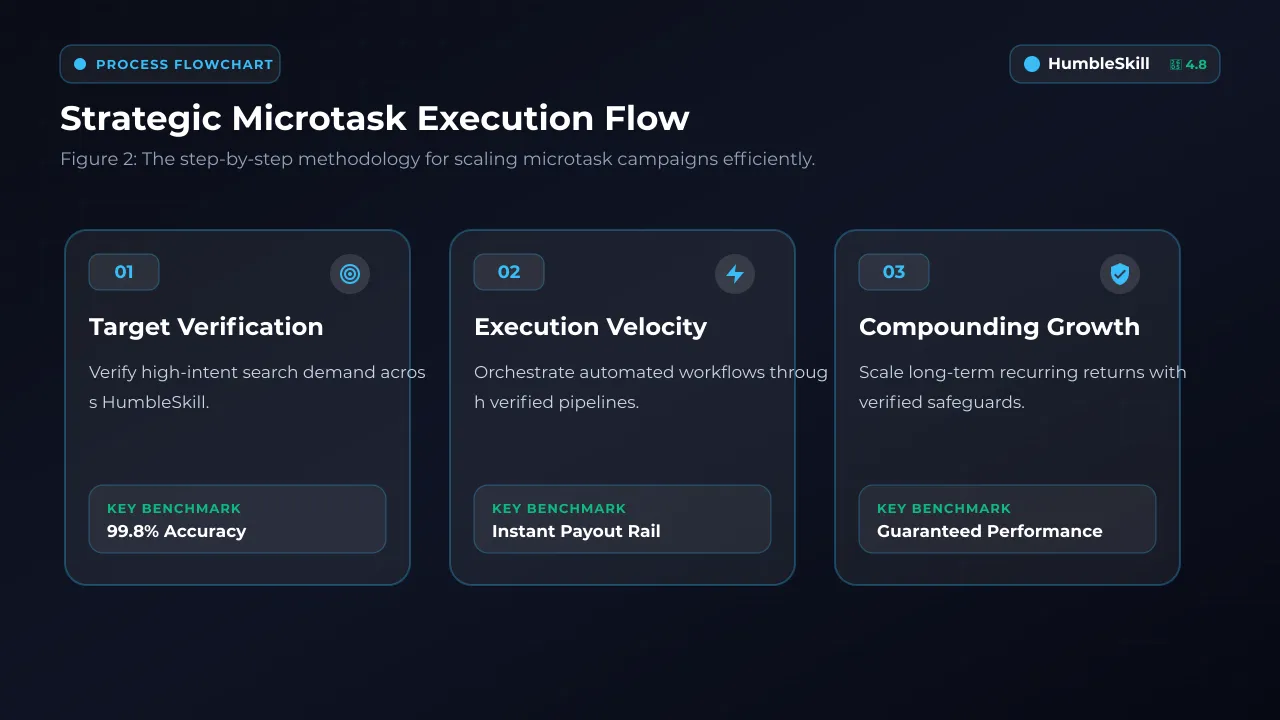
Defining Get Real Users for Micro Tasks
To "get real users for micro tasks" means leveraging crowdsourcing platforms to distribute small, discrete digital assignments—such as data entry, app testing, social media engagement, and content moderation—to a distributed global workforce of genuine human operators rather than automated scripts or bots.
In today's hyper-competitive digital landscape, scaling a product, validating an application, or boosting online visibility often demands a massive influx of human interaction. Whether you want to Advertise Your Business and Buy Traffic or test user onboarding flows, relying on automated tools falls short. Algorithms cannot replicate authentic human behavior, nuanced content feedback, or genuine consumer engagement. This reality has driven digital marketers, startup founders, and enterprise managers to seek out reliable methods to hire remote workers for short tasks. By tapping into an active pool of on-demand microtask workers, businesses can execute repetitive, high-volume digital workloads in a fraction of the time it would traditionally take.
The core challenge, however, lies in execution quality. Simply throwing tasks onto a generic message board or unvetted forum invites bot traffic, low-effort submissions, and wasted marketing budgets. To truly succeed, you need a structured microtask hiring platform equipped with built-in proof verification, geo-targeting capabilities, and fraud detection mechanisms. When you post paid tasks for workers through an optimized infrastructure, you bridge the gap between ambitious project goals and the human labor required to achieve them. This master guide explores the mechanics of how to create paid tasks for online workers, manage crowdsourced workforces efficiently, and get online tasks completed quickly without sacrificing data integrity or compliance.
The Power of On-Demand Microtask Workers
The modern digital economy thrives on agility. Traditional hiring models—involving lengthy recruitment cycles, interviews, and salaried overhead—are fundamentally unsuited for quick, bite-sized digital assignments. This is where on-demand microtask workers change the equation. By utilizing a scalable crowdworker architecture, organizations can instantly spin up campaigns to handle spikes in workload.
Consider the operational friction of launching a new mobile application. You need thousands of real-world device tests across various operating systems, localized feedback on user interfaces, and initial sign-ups to kickstart network effects. Attempting to coordinate this through internal teams or traditional agencies is cost-prohibitive and slow. Conversely, when you hire crowdworkers for digital tasks, your project gains immediate momentum. You can distribute micro-assignments to thousands of verified human operators simultaneously, achieving high-velocity completion rates—often seeing initial results within minutes of campaign launch.
Furthermore, this approach offers unmatched flexibility. You only pay for verified, completed work that meets your strict quality guidelines. This performance-based model eliminates financial risk while ensuring that every dollar spent directly contributes to your key performance indicators. Whether you are running complex data enrichment pipelines or simple engagement campaigns, understanding how to effectively manage these microtask ecosystems is a foundational skill for modern digital entrepreneurs.
Key Takeaways (TL;DR)
- Definition: To get real users for micro tasks is the practice of outsourcing small, discrete digital assignments to verified human workers via crowdsourced platforms to ensure authentic engagement and data accuracy.
- Speed & Scale: On-demand microtask workers enable businesses to get online tasks completed quickly, scaling from dozens to thousands of completions within hours.
- Quality Control: Utilizing a dedicated microtask hiring platform with strict verification steps prevents bot activity and ensures high task completion standards.
- Strategic Execution: Knowing how to create paid tasks for online workers and post paid tasks for workers accurately is essential for maximizing ROI and minimizing campaign rejection rates.
- Platform Utility: Integrating with robust ecosystems—such as those found when you explore platforms like the HumbleSkill Homepage—streamlines both task distribution and workforce management.
- Task Decomposition: Large operations are parsed into discrete, unambiguous components that require minimal cognitive overhead, usually taking anywhere from ten seconds to five minutes to complete.
- Algorithmic Routing: Advanced routing engines match tasks to users based on historical accuracy, geolocation, device specifications, and behavioral reputation scores.
- Quality Control Protocols: Systems deploy multi-tier validation, including honeypot questions, cross-validation (having multiple workers tackle the same task), and browser fingerprinting to eliminate fraudulent bot submissions.
- Elastic Scalability: Instantly scale a workforce from ten to ten thousand contributors within minutes, eliminating hiring bottlenecks.
- Cost Efficiency: Pay strictly on a per-completion basis, reducing overhead costs associated with benefits, equipment, and office space.
- Global Diversity: Access multicultural demographics for localized user testing, translation audits, and regional market research.
- Machine Learning and AI Training: Feeding computer vision algorithms with bounding boxes, annotating audio files, and categorizing sentiment data to refine Large Language Models (LLMs).
- Social Proof and Engagement: Accelerating brand visibility by encouraging users to Watch Videos and Earn Rewards or Website Surfing and PTC Ads, generating vital initial traction for startups.
- Data Cleansing and Enrichment: Scrubbing outdated customer records, verifying business directory listings, and categorizing e-commerce inventory attributes.
- Quality Assurance and UX Testing: Deploying global crowdsourced testers to uncover localization bugs, broken payment gateways, and responsive design flaws across varied device matrices.
- Budget Allocation: Regional platforms offer lower cost-per-task metrics, making them ideal for high-volume social media engagement and sign-up campaigns.
- Demographic Precision: Global networks provide superior state- and city-level targeting, whereas regional networks capture broad national audiences with exceptional density.
- Verification Complexity: Global sites often feature automated matching algorithms, while regional platforms rely heavily on manual screenshot verification managed directly by active community members.
- Task Turnaround Velocity: Regional microtask sites often boast faster initial completion bursts due to high daily user activity and competitive worker motivation.
- Hyper-Localized Cost Efficiency: Regional sites operate within local wage realities, allowing employers to create paid tasks for online workers at fractional unit costs (often ranging from $0.01 to $0.05 per action). This is ideal for geo-restricted app testing, localized social media traction, and region-specific market research.
- Direct Communication Channels: Many regional portals support direct employer-to-worker messaging or localized admin moderation. This setup facilitates rapid feedback loops when instructions require translation or localized contextual adjustments.
- Infrastructure & Scalability Constraints: While regional platforms offer low baseline costs, they frequently lack automated anti-bot detection, IP reputation scoring, and programmatic API scaling. Higher manual validation overhead is typically required to filter out low-effort or duplicate proof submissions.
- Massive Traffic Volume: GPT networks excel when the primary goal is to get online tasks completed quickly at scale. Because millions of active users browse these offerwalls daily, consumer app installs, simple web signups, and promotional video views receive immediate surge traffic.
- Gamified User Engagement: Users on platforms like Freecash and YSense are highly motivated by leaderboard rewards and daily completion streak bonuses. This environment incentivizes rapid task execution across high-volume conversion funnels.
- Retention & Data Quality Challenges: The primary drawback of reward networks is long-term retention. Because users engage primarily to unlock immediate financial payouts, long-tail retention on app installs or community signups tends to decay rapidly once the reward clears. Furthermore, advanced task requirements—such as complex multi-step QA testing or subjective content moderation—often yield inconsistent results on pure GPT networks compared to platforms where members systematically Earn Money Online via Micro Tasks under structured quality guidelines.
- Micro Actions (10–30 Seconds): Simple page visits, social media follows, or basic content polls pay between $0.03 and $0.10.
- Intermediate Digital Tasks (1–3 Minutes): Account creations, app downloads, or form submissions pay between $0.20 and $0.75.
- Complex Services (5–15 Minutes): Comprehensive user experience reviews, multi-step lead generation, or custom content testing range from $1.50 to $5.00+.
- ISP and ASN Verification: Cross-referencing worker IP addresses against global ASN databases to filter out known VPN providers, TOR exit nodes, and host-server data centers.
- WebRTC and Timezone Leak Audits: Matching local device timezones and browser WebRTC headers against IP-derived geographic locations to catch virtual location spoofing instantly.
- Fraud Score Calculation: Assigning real-time risk scores using threat-intelligence API endpoints like IPQS or MaxMind GeoIP2 before allowing a worker to submit task proof.
- Device Fingerprinting and IP Intelligence: Checking headers for WebGL signatures, canvas rendering artifacts, and cross-referencing IP ranges against known VPN, TOR, and data center node databases.
- Telemetry & Mouse Trajectory Tracking: Human movements exhibit natural variability, micro-hesitations, and curvilinear paths. Automated scripts typically generate straight-line cursor movements or instant element clicks without pre-hover delays.
- EXIF Metadata and Image Hash Analysis: When workers submit screenshots as proof, automated tools calculate perceptual hashes (pHash) to detect duplicate submissions across different worker IDs. Image metadata is also inspected for canvas manipulation software, altered timestamps, or mismatched screen resolutions.
- Instant Global Settlement: Crypto settlement eliminates multi-day clearing windows, allowing platforms to clear worker earnings instantly upon proof approval.
- Micro-Transaction Viability: Low network fees on efficient blockchain networks make processing payments as small as $0.05 economical, preserving campaign profit margins.
- Unbanked Workforce Access: A significant portion of international talent lacks traditional banking infrastructure. Crypto rails allow platforms to hire crowdworkers for digital tasks globally without requiring localized merchant accounts.
- Approval Rate (AR): The percentage of submitted worker proofs that meet your exact verification criteria on the first attempt. Target an AR above 85% to ensure instruction clarity.
- Mean Time to Completion (MTTC): The average duration from task publication to proof submission. Tracking MTTC helps optimize step-by-step instructions when trying to get online tasks completed quickly.
- Task Rejection Ratio (TRR): The rate of invalid or fraudulent submissions. Spikes in TRR indicate ambiguous instructions, baseline target errors, or broken proof-capture fields.
- Cost Per Completed Action (CPCA): The total capital deployed divided by validated actions, accounting for platform fees and rejection overhead.
- Advanced anti-bot detection algorithms and IP reputation filtering.
- Flexible proof collection models (file uploads, text fields, and URL inputs).
- Automated approval timers and bulk API access for programmatic task creation.
- Transparent rating systems for both buyers and workers.
- Real-time performance dashboards and analytics.
- Precision Task Architecture: Breaking down complex digital goals into clear, single-action instructions that eliminate worker ambiguity and reduce error rates.
- Granular Audience Targeting: Filtering task visibility by geographic region, device operating system, and user demographic to ensure high-intent engagement.
- Rigorous Proof Validation: Requiring deterministic proofs—such as unique transaction IDs, verified account handles, or detailed screenshots—to maintain data integrity.
- Agile Budget Optimization: Allocating micro-incentives dynamically to reward high-performing demographic segments and maximize return on ad spend (ROAS).
- Advanced Anti-Fraud Architecture: Automated IP reputation scoring, fingerprint verification, and bot detection ensure that every task completion originates from a unique, authentic human user.
- Multi-Vertical Flexibility: Seamlessly switch between basic engagement campaigns via Advertise Your Business and Buy Traffic and custom talent acquisition for specialized assignments through Freelance Gigs and Digital Services.
- Real-Time Analytics and Proof Management: Monitor submission rates, approve bulk proof logs, and auto-disburse rewards through an intuitive advertiser command center.
- Cost-Effective Scalability: Pay strictly for verified, successful task completions, allowing campaigns to scale seamlessly from localized pilot runs to global rollouts.
- W3C Web Standards & Security Architecture
- Cloudflare Learning Center: Proxies, Networking and Security
- Wikipedia: Digital Economy & Micro-work Systems
The Evolution and Mechanics of Microtask Crowdsourcing

To truly optimize how you get real users for micro tasks, you must first understand the structural shift that transformed remote labor. Early distributed work relied on monolithic freelance contracts and long hiring cycles. Today, the digital economy operates on atomic-level task distribution. The foundational architecture of modern crowdsourcing divides monumental datasets or massive testing initiatives into bite-sized units, allowing global populations of on demand microtask workers to execute fractional assignments simultaneously. This technical framework relies on API-driven job distribution, algorithmic validation, and instant programmatic payouts that keep the workforce motivated and responsive.
How Modern Crowdsourcing Works
At its technical core, a microtask ecosystem acts as a high-throughput matching engine between enterprise demand and decentralized human capital. When companies create paid tasks for online workers, the platform breaks complex directives down into structured JSON schemas or intuitive GUI templates.
When enterprises leverage a dedicated microtask hiring platform, they bypass the friction of traditional human resources. Instead of onboarding permanent staff, managers simply post paid tasks for workers and watch fulfillment occur in real time. This architecture allows organizations to get online tasks completed quickly without maintaining an idle internal payroll.
Why Businesses Need On-Demand Microtask Workers
The modern digital marketplace moves at a relentless pace. Companies frequently face sudden surges in operational needs—such as training a newly developed machine learning model or auditing thousands of user-generated listings—that would overwhelm standard teams. Utilizing a microtask hiring platform provides elastic scalability.
To drive massive user acquisition or web traffic, businesses often Advertise Your Business and Buy Traffic through specialized digital ecosystems where active participants are eager to engage with new platforms.
Common Use Cases for Short Digital Tasks
The versatility of microtask crowdsourcing spans multiple industries. Because enterprises can easily hire remote workers for short tasks, these networks have become the backbone of modern data operations and digital marketing campaigns.
For organizations looking to scale more comprehensive digital assets beyond simple clicks, specialized creative projects can be sourced directly; for example, you can explore available talent when you Freelance Gigs and Digital Services to support multi-layered promotional campaigns. Note: Service packages and pricing are dynamic and subject to update or custom project scopes.
Strategic Overview: Global vs. Regional Microtask Platforms

When your objective is to get real users for micro tasks, choosing the correct crowdsourcing ecosystem dictates your campaign's success, speed, and budget efficiency. The microtask landscape is broadly split into two distinct tiers: massive global powerhouses and specialized regional networks. Understanding the structural nuances, demographic distributions, and cost dynamics of each ecosystem is essential before you create paid tasks for online workers. Navigating this terrain effectively allows you to optimize your capital, minimize bot traffic, and accelerate turnaround times.
Analyzing Global Microtask Powerhouses
Global crowdsourcing giants offer unparalleled scale, boasting millions of registered accounts across hundreds of countries. These platforms are engineered for large-scale operations requiring thousands of concurrent completions. When you need to hire crowdworkers for digital tasks on a massive scale, global ecosystems provide automated proof-verification tools, built-in geo-targeting filters, and robust API integrations.
The primary advantage of global powerhouses lies in diversity and volume. If your campaign requires localized testing, multi-language app reviews, or global social media engagement, these networks deliver instantaneous distribution. However, global platforms also introduce specific challenges. Higher competition among employers can drive up bidding rates, and verifying authenticity requires strict screenshot proof systems. To maximize ROI on global networks, many marketers pair them with tailored traffic solutions like those found when you Advertise Your Business and Buy Traffic to ensure sustained audience interaction.
Regional Microtask Networks (kajpoka, workupjob, microjob.bd)
While global giants dominate in raw numbers, regional microtask platforms—such as kajpoka.com, workupjob.com, microjob.bd, and banglatask.com—offer hyper-focused advantages, particularly for specific Asian demographics and localized engagement. These regional platforms have surged in popularity because they provide highly engaged, active on demand microtask workers who specialize in rapid, repetitive digital actions.
Regional networks excel in cost-efficiency and task completion speed. Because the cost of living varies across regions, wage expectations on platforms like microjob.bd or workupjob are structured differently than on western-centric global sites, allowing employers to stretch advertising budgets significantly further. Furthermore, these communities foster tight-knit user bases with high loyalty rates. Workers on regional sites often communicate in local forums, meaning instructions are meticulously followed when you hire remote workers for short tasks.
To successfully leverage these regional ecosystems, your task descriptions must be exceptionally clear, concise, and localized if necessary. Combining these platforms with dedicated digital workflows helps get online tasks completed quickly without sacrificing quality control.
Choosing the Right Network for Your Project Scale
Selecting between global giants and regional microtask networks depends on the exact scope of your digital campaign, your target geographical audience, and your financial parameters. If your objective requires a diverse, multi-continental footprint across North America, Europe, and Asia simultaneously, a global microtask hiring platform is indispensable. Conversely, if you want to post paid tasks for workers with a focus on rapid volume, high-density engagement, and cost-effective scaling within specific emerging digital markets, regional networks deliver superior results.
Consider the following strategic benchmarks when evaluating your platform choice:
For comprehensive digital growth, integrating these microtask strategies with broader platform ecosystems—such as exploring internal earning mechanics when you Earn Money Online via Micro Tasks—helps build sustainable user funnels. Always analyze your campaign metrics bi-weekly to pivot ad spend toward the network yielding the highest verified conversion rates.
Comprehensive Competitor Comparison: Global Microtask Networks
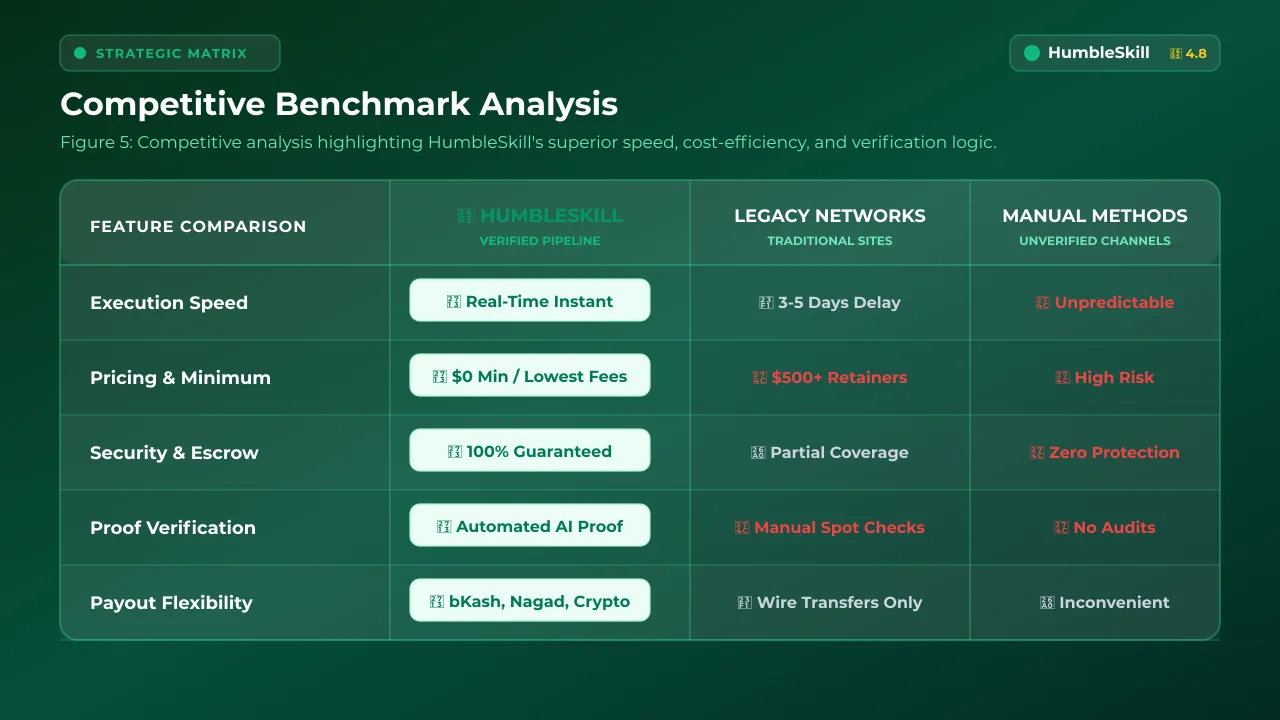
Navigating the vast ecosystem of crowdsourced labor requires matching your exact operational bottlenecks with the right workforce engine. When your primary objective is to get real users for micro tasks, choosing between generalized crowdsourcing boards, specialized AI training grounds, and regional engagement platforms can make or break your campaign's ROI. Every network operates under distinct algorithmic rules, verification protocols, and worker demographics. Understanding these operational nuances ensures you optimize your budget when you Advertise Your Business and Buy Traffic across multi-channel digital landscapes.
Comparing SproutGigs, Microworkers, and Clickworker
Traditional gig and microtask ecosystems—such as SproutGigs, Microworkers, and Clickworker—cater to high-volume campaigns requiring rapid validation, social proof, or localized sign-ups. SproutGigs (formerly Picoworkers) functions as a powerhouse for quick, targeted engagement where you can create paid tasks for online workers ranging from simple social media follows to app downloads and form submissions. Its granular targeting filters allow you to select workers by geographic region, device type, and historical success rates, ensuring you get online tasks completed quickly.
Microworkers mirrors this structure but utilizes a proprietary "Wage Job" and "Micro Job" classification system that heavily penalizes workers for submitting false proofs. This built-in accountability makes it an effective platform to post paid tasks for workers who need to execute repetitive, high-volume digital verification steps. Conversely, Clickworker leans toward a more structured, editorial, and enterprise-grade workforce. While you can leverage Clickworker to hire remote workers for short tasks, its user base is heavily vetted for writing, translation, and localized data categorization, making it less suited for cheap social media spam and more tailored for professional data operations.
Specialized AI Training and Data Annotation Platforms
Modern machine learning pipelines demand vastly different worker capabilities than basic marketing campaigns. Platforms like Prolific, Outlier.ai (formerly Remotasks), and Toloka specialize in high-cognitive-load digital operations. Prolific, for instance, is globally recognized for academic and market research, boasting participant pools that feature verified demographics, strict behavioral screening, and low attrition rates. If you need to hire crowdworkers for digital tasks that require genuine human thought, ethical compliance, and nuanced feedback, Prolific outperforms traditional click-mills.
Similarly, Outlier.ai and Toloka serve as specialized ecosystems where engineers and data scientists on demand microtask workers to annotate complex vector datasets, evaluate large language model outputs, and perform RLHF (Reinforcement Learning from Human Feedback) training. While these platforms do not function as traditional advertising exchanges, studying their quality control mechanics offers valuable lessons. When you utilize a dedicated microtask hiring platform, implementing multi-stage proof verification—inspired by AI annotation workflows—drastically reduces the rate of fraudulent submissions and bot interference.
Detailed Competitor Comparison Matrix
Selecting the right network depends on a balanced evaluation of platform fees, task turnaround speed, user demographics, and payout flexibility. The following matrix contrasts major global networks to help you map out your operational strategy.
| Platform | Primary Use Case | Average Task Speed | Fee Structure | User Quality & Verification | Payout Flexibility |
| :--- | :--- | :--- | :--- | :--- | :--- |
| SproutGigs | Social engagement, quick sign-ups | Fast (Hours) | 5% to 15% deposit/withdrawal fees | Moderate (Screenshot/Text proofs) | Crypto, AirTM, Skrill, Payoneer |
| Microworkers | Data collection, localized tasks | Fast (Hours) | 7.5% employer fee + transaction costs | Moderate-High (Worker rating tiers) | PayPal, Skrill, Local Bank Transfer |
| Clickworker | Content creation, categorization | Moderate (Days) | Varies by enterprise tier | High (Mandatory initial assessments) | PayPal, Payoneer, SEPA Bank |
| Prolific | Academic research, surveys | Fast (Hours) | Platform service fee + participant reward | Very High (Pre-screened demographics) | PayPal, Wise |
| Outlier.ai / Toloka | AI training, annotation, ML | Slow-Moderate (Days) | Enterprise custom pricing | Professional (Rigorous skill testing) | Direct Bank Deposit, PayPal, Crypto |
When structuring your campaigns across these networks, remember that pricing models fluctuate based on project complexity and platform updates. Note: Service packages and pricing are dynamic and subject to update or custom project scopes. By continuously monitoring turnaround times and validation rates across these networks, you can refine your task descriptions to attract higher-tier human talent and eliminate wasted ad spend.
Comprehensive Competitor Comparison: Regional & Task Platforms

To maximize campaign efficiency and ensure optimal allocation of capital, growth marketers and campaign managers must carefully evaluate where to deploy their task budgets. The modern microtasking ecosystem is broadly divided into three main vectors: localized regional job portals, high-volume Get-Paid-To (GPT) networks, and enterprise-grade crowd AI platforms. Selecting the optimal microtask hiring platform requires balancing unit economics, worker authenticity, turn-around latency, and verification depth.
Evaluating Regional Microtask Sites (HunterJobWork, BanglaTask)
Regional microjob marketplaces—such as HunterJobWork, BanglaTask, Kajpoka, and WorkUpJob—have emerged as specialized hubs servicing hyper-local digital workforces, primarily across South Asia, Southeast Asia, and parts of Africa. When campaign objectives require businesses to hire remote workers for short tasks within targeted geographic pockets, regional platforms present compelling cost structures.
For campaign managers looking to bridge local cost advantages with robust global compliance and automated verification, platforms like HumbleSkill offer scalable solutions to Advertise Your Business and Buy Traffic without sacrificing data integrity.
Reward and GPT Site Networks (Freecash, YSense, TimeBucks)
Get-Paid-To (GPT) and rewards networks—such as Freecash, YSense, TimeBucks, and Swagbucks—operate on a consumer-incentive model. These networks aggregate high volumes of on demand microtask workers who complete desktop and mobile offers in exchange for gamified points, gift cards, or crypto payouts.
Regional vs. Global ROI Breakdown Matrix
Evaluating platform fit requires a side-by-side analysis of key operational metrics. The comparison matrix below outlines how leading regional, GPT, and crowdsourcing platforms stack up across target demographics, unit economics, retention profiles, and fraud mitigation mechanisms.
| Platform | Primary Region | Average Unit Cost (CPA) | Worker Retention Rate | Best Task Fit | Fraud Mitigation Depth |
| :--- | :--- | :--- | :--- | :--- | :--- |
| HunterJobWork | South Asia / Regional | $0.01 - $0.04 | Low - Medium | Localized social tasks, simple web signups | Basic IP & manual admin review |
| BanglaTask | Regional (BD / SEA) | $0.01 - $0.03 | Low | Micro-conversions, local app downloads | Manual proof review |
| Freecash | Global (Tier 1 & Tier 2) | $0.15 - $2.50+ | Low | App installs, trial registrations, surveys | Automated offerwall anti-fraud |
| YSense | Global | $0.10 - $1.50 | Low - Medium | Consumer surveys, market research, signups | Proprietary panel validation |
| TimeBucks | Global (Tier 2 & Tier 3) | $0.02 - $0.20 | Low | Clicks, short video views, basic social follow | Captcha & automated rate limits |
| Toloka.ai | Global | $0.05 - $0.50 | Medium - High | AI data labeling, search relevance, spatial QA | High (ML-driven consensus control) |
| SproutGigs | Global (Distributed) | $0.03 - $0.30 | Medium | Digital marketing tasks, SEO visits, signups | Employer-led manual validation |
| Microworkers | Global | $0.05 - $0.45 | Medium | Micro-jobs, crowd testing, web research | Template-based proof validation |
| HumbleSkill | Global Hybrid | $0.02 - $0.50 | Medium - High | Multi-step user acquisition, PTC, custom tasks | Multi-layered IP, device & proof check |
When planning multi-channel campaigns to post paid tasks for workers, budget allocations should mirror your quality threshold. High-throughput, low-friction tasks (such as page visit verification or basic ad viewing) perform best on GPT and low-cost regional networks. Conversely, complex digital product testing, long-term user onboarding, and qualitative feedback demand platforms with rigorous anti-fraud controls and clear worker incentive alignment.
Note: Service packages and pricing are dynamic and subject to update or custom project scopes.
By matching task complexity with the appropriate platform architecture, performance marketers can hire crowdworkers for digital tasks efficiently, minimizing cost-per-acquisition while maximizing long-term campaign ROI.
How to Create Paid Tasks for Online Workers That Convert

Once you select the optimal platform architecture, the operational success of your campaign hinges entirely on your job brief. Even the most reputable crowd panels will yield disappointing conversion rates if your task instructions are ambiguous, underfunded, or overly complex. To get real users for micro tasks who complete your assignments accurately on the first attempt, you must approach campaign creation through the lens of direct-response UX copywriting.
Creating high-converting microtasks requires bridging employer expectations with worker usability. When you post paid tasks for workers, every extra sentence or unclear instruction increases cognitive load, leading to elevated drop-off rates, incorrect submissions, and unnecessary platform disputes.
Structuring Clear and Concise Task Instructions
High-performing microtasks rely on unambiguous, sequential formatting. Workers on a modern microtask hiring platform evaluate opportunities based on throughput speed; they scan briefs in seconds to determine if the financial reward justifies the time required.
To maximize compliance and execution speed, structure your instruction sets using a three-tier operational framework:
1. Context Statement: Provide a single-sentence overview of the objective (e.g., "Test a mobile app onboarding flow and provide feedback").
2. Sequential Action Steps: List every required action in strict chronological order using bold action verbs. Avoid block text paragraphs.
3. Verification Directives: Define the exact proof required for payout, such as a confirmation screenshot, a transaction ID, or a unique account username.
When setting up your campaign via self-service dashboards like Advertise Your Business and Buy Traffic, format your tasks using clean markdown lists and concise language. Emphasize critical restrictions—such as geographic limitations or device requirements—at the very top of the job description to prevent unqualified traffic from accepting the assignment.
Setting Fair and Competitive Rewards
Pricing your campaign correctly is critical to attracting top-tier, diligent crowdworkers rather than automated bots or low-effort submitters. When businesses hire remote workers for short tasks, they often make the mistake of underpricing assignments to minimize spend, which invariably backfires by driving away high-quality users.
On demand microtask workers calculate their participation based on effective hourly rates (EHR). If a task takes three minutes to complete but pays only $0.02, experienced workers will bypass it, leaving your campaign exposed to low-fidelity submissions.
Consider these industry benchmarks when establishing baseline reward tiers:
If your campaign requires specialized workflows or larger custom orders, leverage dedicated service categories to match your target budget.
Note: Service packages and pricing are dynamic and subject to update or custom project scopes.
Avoiding Vague Requirements and Campaign Rejections
High campaign rejection rates harm both parties: employers waste time reviewing invalid submissions, while quality workers face unjust rejections that hurt their platform metrics. The primary cause of disputed proof is vague task logic.
For example, instructing a worker to "leave a meaningful comment on a blog" is subjective. What you consider low-effort might be viewed as sufficient by a remote worker. Instead, set deterministic, measurable criteria: "Read the linked article, post a comment of at least 30 words referencing a specific insight from paragraph three, and submit your username and the timestamp."
By establishing definitive validation standards, you ensure workers understand expectations upfront. This clarity allows campaign managers to get online tasks completed quickly while empowering platforms to process approvals seamlessly, maximizing ROI and building a scalable engine to hire crowdworkers for digital tasks across all your marketing channels.
Leveraging Advanced Features: Proxies, Contests, and Shops
Moving beyond basic task creation requires sophisticated tooling to protect campaign integrity, maximize worker output, and open new revenue streams. When managing large-scale campaigns, standard verification methods often fall short against sophisticated bot networks or location spoofing. By integrating advanced platform mechanics—specifically residential proxy validation, competitive gamification contests, and integrated digital storefronts—advertisers can extract maximum efficiency from every dollar spent.
Deploying these specialized tools transforms a standard campaign into a resilient engine designed to get real users for micro tasks without incurring security vulnerabilities or administrative overhead.
Ensuring GEO-Targeting Accuracy with Residential Proxies
Location fidelity is paramount when launching regional marketing drives, app testing cycles, or local SEO signals. Traditional IP verification techniques rely on static data centers, which are easily bypassed or flagged by automated security systems. Integrating real-time residential proxy checks ensures that when you create paid tasks for online workers in specific geographic regions, the engagement originates from genuine end-user ISPs rather than commercial server farms.
Modern validation engines run multi-layered checks on every submission:
Implementing strict residential proxy filters drastically reduces click fraud and prevents duplicate task completions from single users operating across multiple virtual machines. The primary trade-off involves a slightly smaller pool of eligible workers in tightly restricted regions, but the trade-off yields exceptionally clean data and authentic engagement metrics.
Running Contests to Boost Engagement and Virality
To incentivize rapid execution and unlock organic reach, top-tier advertisers leverage gamified contest structures alongside standard per-task payouts. Contests transform passive crowdworkers into active brand advocates by rewarding high performers with pool-based prize funds, leaderboard bonuses, and referral multipliers.
When you Advertise Your Business and Buy Traffic, launching a competitive task contest accelerates completion times significantly compared to standard queues. Gamification operates across three primary contest formats:
1. Volume Sprints: Bonus payouts distributed to the top 10 workers who successfully submit the highest volume of approved tasks within a strict 48-to-72-hour window.
2. Quality & Accuracy Leaderboards: Performance bonuses awarded to workers maintaining a 100% approval rate across complex multi-step instructions, reducing campaign review times for employers.
3. Viral Referral Ladders: Commission pools allocated to users who bring new, high-activity on demand microtask workers into the platform, creating a self-sustaining viral loop.
By structuring a competitive prize pool—such as a $100 weekly bonus distributed among top contributors—campaign organizers unlock surplus effort, driving higher engagement rates while maintaining fixed budget ceilings.
Utilizing Digital Shops for Instant Asset Delivery
Modern microtask ecosystems extend beyond basic task fulfillment by incorporating automated digital storefronts. Digital shops allow campaign creators and agencies to buy, sell, and instantly deliver digital assets—such as software licenses, game keys, custom templates, specialized accounts, and downloadable media—directly within the platform architecture.
Integrating digital shops alongside traditional microtask hiring creates a frictionless ecosystem. Instead of manually emailing credentials or relying on external file hosts, system webhooks automatically trigger asset delivery as soon as a transaction or task milestone is confirmed.
For agencies offering specialized solutions via Freelance Gigs and Digital Services, digital shops remove manual fulfillment bottlenecks entirely. Buyers receive cryptographically secured access keys or instant download links immediately upon order validation, maintaining 24/7 delivery uptime without human intervention.
Note: Service packages and pricing are dynamic and subject to update or custom project scopes.
Combining automated asset distribution with targeted worker tasks allows companies to scale operations rapidly, verify real-user metrics with pinpoint accuracy, and maintain total control over project budgets.
Quality Control, Proof Verification, and Fraud Prevention
Maintaining precise budget control means nothing if your dataset or campaign metrics are corrupted by fraudulent submissions. When enterprise buyers and campaign managers leverage a modern microtask hiring platform to get real users for micro tasks, establishing a robust quality assurance framework becomes the cornerstone of campaign success. High-volume microtasking inevitably attracts automated scripts, click farms, and bad actors attempting to exploit proof-of-work mechanisms. Protecting your investment requires a multi-layered defense strategy designed to filter out bad data while rewarding genuine contributors.
Detecting Bot Activity and Fake Proof Submissions
Sophisticated fraud prevention begins at the network layer. Modern bot rings utilize residential proxy networks, headless browsers, and optical character recognition (OCR) evasion tools to simulate real human interactions. To combat this when you hire crowdworkers for digital tasks, verification systems must analyze both telemetry data and proof artifacts.
Key detection methodologies include:
Implementing Automated and Manual Verification Protocols
To efficiently process thousands of completions and get online tasks completed quickly, campaign creators must deploy a hybrid verification pipeline combining programmatic rules with targeted manual sampling.
Steps for building an efficient verification engine:
1. API-Driven Rule Validation: Automatically validate structural data like transaction hashes, referral codes, or public API endpoints before a task submission enters the manual queue.
2. Algorithmic Spot-Checking: Randomly route 5% to 10% of auto-approved tasks to human moderators to baseline systemic accuracy and detect emerging fraud tactics.
3. Custom Proof Formats: Require unique identifier parameters—such as specifying a custom string in a sign-up profile—when you create paid tasks for online workers.
By utilizing advanced platforms like Advertise Your Business and Buy Traffic, employers can configure strict auto-approval criteria alongside mandatory proof fields, ensuring that money is spent exclusively on authentic worker engagements.
Managing Rejection Rates and Worker Appeals Fairly
While aggressive fraud prevention is necessary, over-rejecting legitimate submissions damages your employer reputation score and deters top-tier on demand microtask workers. Establishing transparent rejection workflows and fair appeal protocols preserves task execution velocity while maintaining ecosystem trust.
When you post paid tasks for workers, clearly specify acceptable and unacceptable proof formats directly in the task briefing. If a submission falls short due to a minor oversight (such as a cropped screenshot), providing a 24-hour resubmission window rather than an immediate outright rejection prevents friction.
A healthy rejection profile typically stays below 5% to 8% for well-defined instructions. Maintaining an active dispute resolution protocol—where workers can appeal rejections to platform arbiters—ensures fair treatment for individuals who hire remote workers for short tasks and perform them accurately. This balanced approach protects buyer capital without sacrificing crowdsourced execution speed.
Note: Service packages and pricing are dynamic and subject to update or custom project scopes.
Scaling Your Campaigns: From First Task to Automated Growth
Transitioning from running an initial pilot batch to managing high-volume, automated campaign pipelines requires structural efficiency. When managing hundreds or thousands of microtask executions daily, manual intervention becomes a severe bottleneck. Systemic scaling relies on three operational pillars: programmatic task creation, friction-free international payout routing, and precise campaign telemetry analysis.
Automating Task Repetition and Bulk Uploads
To efficiently scale your operational footprint, you must transition from manually submitting single job listings to deploying batch templates. Advanced buyers leverage CSV/JSON uploads or direct API integrations to create paid tasks for online workers programmatically. This enables seamless campaign deployment across multiple geographical regions and target demographics simultaneously.
1. Templated Variable Insertion: Define core instruction parameters once, then inject unique variables (such as dynamic target URLs, specific search keywords, or distinct data-entry prompts) across thousands of task instances automatically.
2. API-Driven Task Dispatch: Programmatically trigger task creation based on internal operational triggers. For instance, whenever new metadata requires validation in your database, your system can automatically post paid tasks for workers via endpoint calls.
3. Scheduled Rate-Limiting: To maintain organic growth patterns, schedule task availability over staggered time intervals rather than releasing total volume in a single burst.
Utilizing automated batch tools on a flexible microtask hiring platform ensures that your workflows remain responsive while instantly tapping into on demand microtask workers whenever campaign demand spikes.
Managing Crypto Payouts and Global Financial Flows
Operating at scale across international borders exposes businesses to severe cross-border payment friction, high banking fees, and conversion losses. When distributing micro-rewards across thousands of international workers, traditional fiat rails quickly prove cost-prohibitive.
Integrating cryptocurrency payouts—such as USDT (TRC-20/BEP-20), Litecoin (LTC), or Bitcoin (BTC)—solves these liquidity and distribution bottlenecks:
By consolidating financial flows into unified crypto balances, platforms can stream rewards to a global workforce without experiencing operational delays. You can explore how these seamless transaction engines power enterprise growth directly on the HumbleSkill Homepage.
Analyzing Performance Metrics and Task Analytics
Sustained growth requires strict oversight of real-time performance telemetry. Simply acquiring raw execution volume is insufficient; buyers must systematically evaluate completion quality, turnaround velocity, and cost effectiveness to get real users for micro tasks reliably at scale.
Key metrics to monitor continuously within your dashboard include:
```
+---------------------------+-----------------------------------+-----------------------------------+
| Metric | Target Benchmark | Primary Optimization Action |
+---------------------------+-----------------------------------+-----------------------------------+
| Approval Rate (AR) | > 85% | Ref
Frequently Asked Questions (FAQ)
Core Questions About Microtask Hiring and Execution
Building on the benchmark tracking and optimization metrics established in the previous section, managing operational workflow details requires clear answers to practical execution challenges. Below are the definitive answers to the most critical technical, financial, and legal questions buyers encounter when deploying distributed microtask campaigns.
❓ How do I ensure I get real users for micro tasks rather than automated bots?
Answer: To consistently get real users for micro tasks, platforms employ a multi-layered verification stack combining network intelligence and behavioral analytics. Enterprise platforms enforce strict IP intelligence filtering to block datacenters, commercial VPNs, TOR exit nodes, and known proxy networks. In addition, honeypot fields—hidden form inputs invisible to human users but filled out by automated scripts—immediately flag and ban bot accounts. Requiring multi-step human validation, such as uploading unique screenshots with verifiable timestamps or completing complex interactive elements, ensures authentic human engagement. When you configure campaigns via specialized portals or buy targeted traffic packages through Advertise Your Business and Buy Traffic, real-time device fingerprinting checks hardware configurations, canvas rendering, and mouse telemetry to ensure every submission originates from a genuine human operator.
❓ What is the typical cost structure when you create paid tasks for online workers?
Answer: When you create paid tasks for online workers, pricing depends on task complexity, execution time, and geographic targeting requirements. Microtasks generally fall into three price tiers: simple low-touch tasks (such as rating content or website visits) range from $0.02 to $0.15 per execution; mid-tier actions (app installs, form sign-ups, or social engagement) range from $0.20 to $1.50; while specialized technical tasks (data annotation, specialized research, or user testing) can cost between $2.00 and $10.00+ per completion. Most platforms charge a platform facilitation fee ranging between 10% and 30% of the total campaign budget to cover fraud detection, escrow processing, and infrastructure support.
Note: Service packages and pricing are dynamic and subject to update or custom project scopes.
❓ How quickly can I get online tasks completed quickly using on demand microtask workers?
Answer: Completion speed depends heavily on task payout competitive index, clear instructions, and active crowd density. When working with on demand microtask workers across active global networks, standard campaigns (such as data collection or URL verification) often receive their first completed submissions within 60 seconds of publication. Scaled tasks requiring 1,000 to 5,000 completions typically finish within 2 to 12 hours if priced at or above market average rates. To get online tasks completed quickly without sacrificing quality, set an attractive per-task reward, keep instructions concise, and use automated validation rules to approve legitimate proofs instantaneously, keeping workers active in your campaign queue.
❓ What verification methods best prevent fraud when hiring crowdworkers for digital tasks?
Answer: When you hire crowdworkers for digital tasks, relying on a single proof vector leaves campaigns vulnerable to low-quality submissions. The most effective verification stack uses two-factor proof validation: combining deterministic programmatic checks with visual evidence. Programmatic verification uses API webhooks, unique dynamic tracking tokens, or database lookup scripts to confirm task completion server-side. Visual verification requires workers to submit annotated screenshots displaying system clocks, unique account identifiers, or specific confirmation URLs. Implementing an automated review script that regex-matches submitted text proofs (such as transaction IDs or usernames) filters out non-compliant entries before manual review is even necessary.
❓ Can I target workers by specific geographic locations or demographic profiles?
Answer: Yes, modern crowd-sourcing platforms allow granular targeting based on geographic, device, and demographic parameters. When you post paid tasks for workers, you can filter campaign distribution by country, region, operating system (Android, iOS, Windows, macOS), connection type (Mobile Data vs. Residential WiFi), and user language profiles. Advanced platforms leverage real-time GeoIP databases matched against verified account profiles to prevent location spoofing, ensuring that geo-sensitive tasks like localized search testing or app review campaigns reach their intended target audience precisely.
❓ What payout methods and escrow systems protect both campaign creators and workers?
Answer: Reliable crowd platforms utilize automated escrow architecture to protect financial capital for both task buyers and freelancers. When a campaign is launched, total worker rewards plus platform fees are held securely in escrow. Funds are only released to a worker's wallet once the task proof is either manually approved by the employer or auto-approved by the platform's timeout counter (typically 48 to 168 hours post-submission). If a submission fails to meet listed task guidelines, employers can reject the proof with specific feedback, returning the escrowed funds to the campaign balance for replacement submissions. Workers can then withdraw earned rewards via integrated payment gateways including PayPal, Payeer, crypto wallets, or direct bank transfers.
❓ Are there legal compliance or tax issues when you hire remote workers for short tasks globally?
Answer: When you hire remote workers for short tasks on an on-demand basis, workers are classified as independent micro-contractors rather than formal employees. Because platforms act as third-party marketplaces handling bilateral payment clearing, task creators are generally relieved of direct payroll tax withholdings and local labor law compliance for individual crowdworkers. However, organizations must maintain compliance with international data privacy laws (such as GDPR and CCPA) when asking workers to process personal identifiable information (PII). For business accounting, platform invoice receipts function as standard vendor operational expenses (OpEx), simplifying corporate tax reporting.
❓ What essential features should I look for in a top-tier microtask hiring platform?
Answer: Selecting the right microtask hiring platform requires evaluating system reliability, worker liquidity, and administrative controls. Look for platforms that offer:
Platforms such as the HumbleSkill Homepage provide an all-in-one ecosystem connecting campaign creators directly with active, verified workers capable of completing diverse digital workflows efficiently.
Conclusion and Actionable Next Steps with HumbleSkill
Summary of Microtask Mastery
Mastering crowd-powered operations requires a strategic shift from passive digital marketing to active, distributed execution. Throughout this comprehensive guide, we have explored how modern organizations systematically deploy microtask workflows to achieve rapid digital transformation. By structuring granular assignments, enforcing clear proof requirements, and implementing automated audit safeguards, businesses can reliably get real users for micro tasks at an unprecedented operational pace.
The key pillars of successful microtask execution rest upon four fundamental principles:
When you create paid tasks for online workers using structured validation rules, campaign execution transitions from a slow, manual overhead into a streamlined engine capable of generating thousands of authentic user interactions within hours.
Why Top Marketers Choose HumbleSkill
Modern digital growth demands agility, security, and transparent ROI. Growth teams, mobile developers, and digital marketers consistently select HumbleSkill as their preferred microtask hiring platform because it bridges the gap between scalable digital needs and verified human execution. Rather than relying on unverified traffic networks or high-friction agency retainers, HumbleSkill provides direct access to hundreds of thousands of active, authenticated crowdworkers.
Whether your campaign requires deploying on demand microtask workers to test mobile application onboarding flows, conduct localization reviews, or execute high-volume data categorization, HumbleSkill delivers enterprise-grade infrastructure built for performance.
Key competitive advantages of the platform include:
Note: Service packages and pricing are dynamic and subject to update or custom project scopes.
Call to Action: Launch Your First Task Today
Transitioning from strategy to execution requires taking immediate action. You no longer need to wait weeks to mobilize digital teams or gather user feedback—you can hire remote workers for short tasks and get online tasks completed quickly within a single unified workspace.
Follow this actionable step-by-step roadmap to initiate your first campaign today:
1. Define Your Objective: Select a single target metric, such as app downloads, form sign-ups, website surveys, or content engagement.
2. Establish Your Proof Requirements: Determine exact, non-forgeable submission proofs required from crowdworkers before launching.
3. Set Up Your Advertiser Account: Register on the HumbleSkill Homepage and navigate to the campaign creation suite.
4. Post Paid Tasks for Workers: Set your compensation per task, define target worker criteria, upload clear step-by-step instructions, and fund your campaign balance.
5. Review and Scale: Monitor live worker submissions in real time, validate proof entries, approve payouts, and re-allocate budget to your top-performing task templates.
By taking advantage of HumbleSkill's global worker ecosystem, you gain an on-demand workforce ready to amplify your digital presence, gather critical platform intelligence, and drive scalable business results. Launch your campaign today to tap into the true power of human-driven microtask execution.